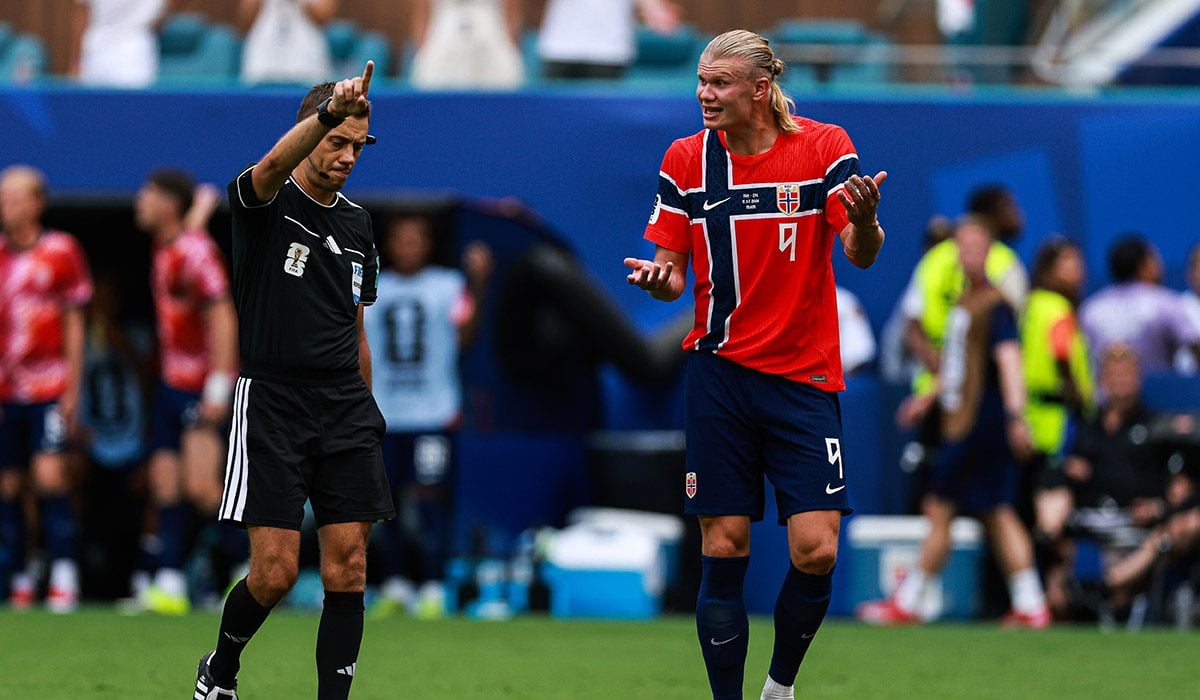

Norway have been left furious with FIFA over England’s equalising goal during Saturday night’s World Cup quarter-final.
England scraped through to the semi-final with a 2-1 victory after extra time, with Jude Bellingham netting a brace against the Scandinavian side.
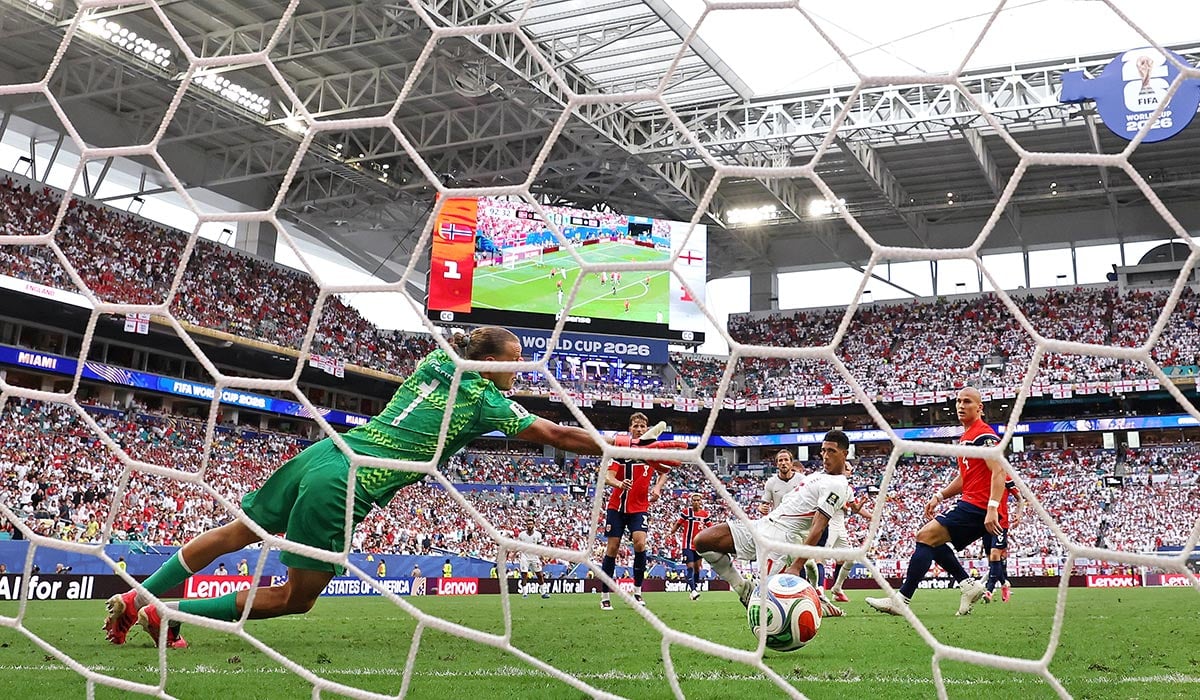
However, Bellingham’s first goal has been marred by controversy after the ball appeared to hit a cable connected to a Spidercam in the build-up to the equaliser.

Norway had taken the lead in the 36th minute, with Andreas Schjelderup’s effort from the wing catching Jordan Pickford off guard.
Not too long afterwards, Norway goalkeeper Orjan Nyland appeared to hit one of the cables that are connected to the overhead Spidercam at the Miami Stadium.
The ball immediately changed path and dropped to Elliot Anderson’s feet, with two passes then leading to Bellingham’s finish.
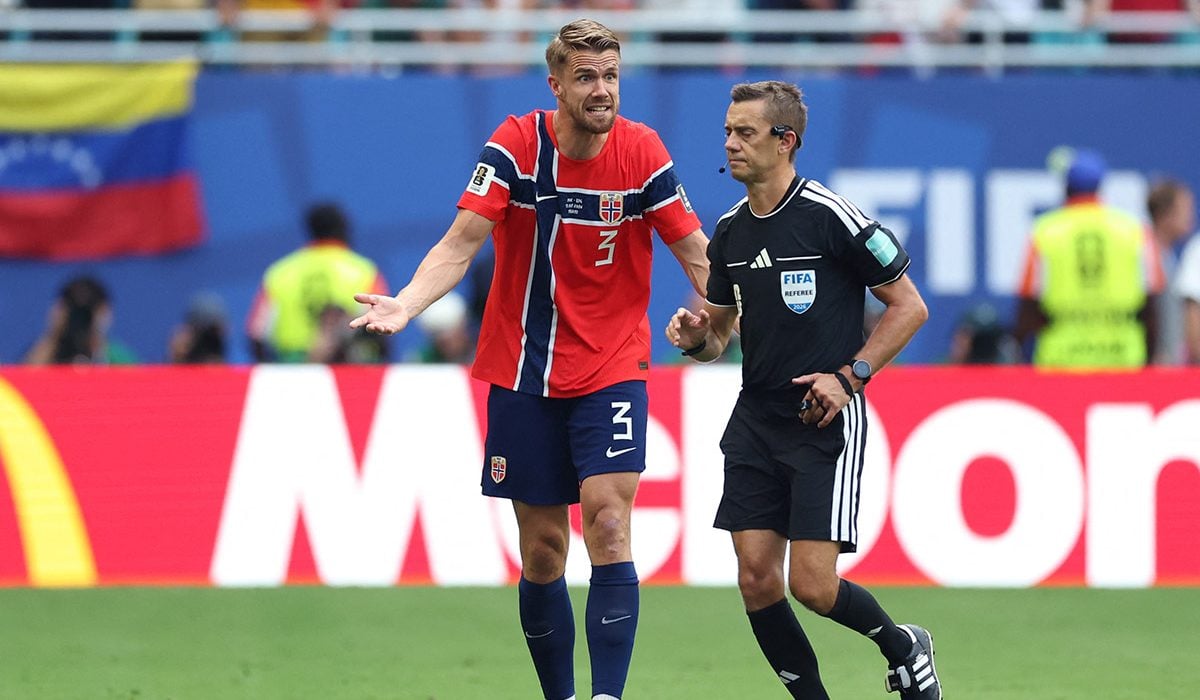
Norway were left livid after VAR did not intervene to disallow the goal, despite the rules stating that the play should have been stopped.
The International FA Board (IFAB) states that if the ball hits the Spidercam or one of its cables, the referee should give a drop ball at the point of contact.
After the match, FIFA responded to Norway’s complaints, claiming that officials ‘checked the data and no peak on the graph from the connected ball heartbeat sensor’.

A statement read: ‘Before England’s goal in minute 45+2 against Norway, the sensor in the Connected Ball showed no peak in the “heartbeat of the ball” when in the air, and therefore no evidence that the ball touched the overhead wire and changed the movement of the ball.’
The World Cup ball has a built-in sensor chip which captures the ball’s position, speed, and exact kick point 500 times per second.
This data is relayed to a team of officials who should be able to detect whether a touch on the ball was made by the cable.
Speaking at half-time, Norway’s assistant coach Kent Bergersen told TV2: ‘Before the goal, Orjan hits the wire for the camera over the field, so the ball is shorter than it should have been. The referees should have looked into that.’
Former Premier League referee Mark Clattenburg also told Fox Sports that the play ‘should have been picked up by the VAR’.
Norway had more difficulties with VAR in the second half after Torbjorn Lysaker Heggem’s 55th-minute goal was ruled out for a foul by Erling Haaland.
The VAR controversially ruled that Haaland had pushed over Anderson as the corner was being taken, despite most of the players jostling with each other in the box.
The decision meant that the match finished 1-1 and went to extra time, where Bellingham won the game for England and set up a semi-final with Argentina on Wednesday.
Before England’s goal in minute 45+2 against Norway, the sensor in the Connected Ball showed no peak in the ‘heartbeat of the ball’ when in the air, and therefore no evidence that the ball touched the overhead wire and changed the movement of the ball. pic.twitter.com/gYf9ukfveT
— FIFA Media (@fifamedia) July 11, 2026