
Whatever Happened to Madeline Stone? by Louise O’Neill
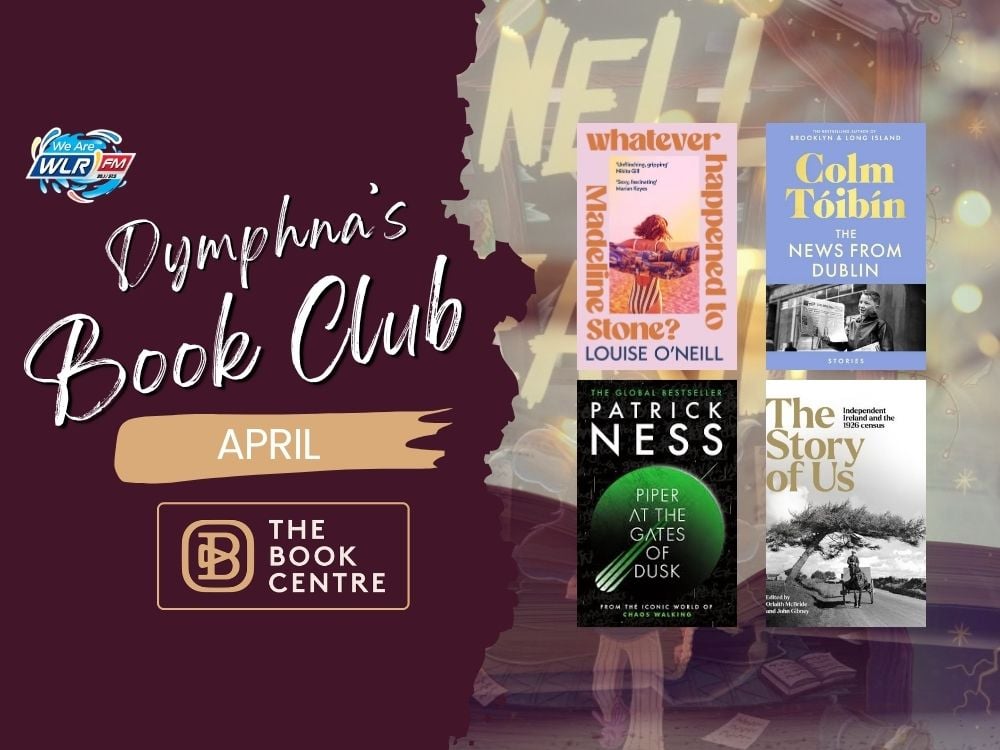
In Dymphna’s Book Club, we look at some cracking books this month! Louise O’Neill’s Whatever Happened to Madeline Stone? is a dark and compelling exploration of fame, identity, and psychological trauma within the entertainment industry. The novel centres on twin sisters, Madeline and Chelsea Stone, who are raised as child actors under the controlling influence of their ambitious mother. When Chelsea is chosen for a major role over Madeline, the latter begins to unravel, developing destructive coping mechanisms before ultimately disappearing under mysterious circumstances. The narrative unfolds across dual timelines—2003 and 2025—allowing the reader to gradually piece together the truth behind Madeline’s fate while observing Chelsea’s present-day success and lingering guilt. O’Neill interrogates themes such as toxic celebrity culture, parental control, and the commodification of young women, presenting a critique of an industry that thrives on exploitation. The characters are vividly drawn, particularly Madeline as a tragic figure and Chelsea as a survivor burdened by complicity. Overall, the novel highlights the psychological cost of fame and the fragility of identity when shaped by external validation.
The News from Dublin by Colm Tóibín
In The News from Dublin, Colm Tóibín offers a collection of understated yet emotionally powerful short stories that examine moments of quiet crisis in the lives of ordinary individuals. Set both in Ireland and abroad, the stories explore themes of grief, exile, family dynamics, and moral ambiguity. Rather than relying on dramatic plot developments, Tóibín focuses on subtle emotional shifts, capturing the inner lives of characters as they confront loss, displacement, or difficult decisions. Figures such as Maurice Webster, who struggles to secure medical help for his dying brother, exemplify the collection’s emphasis on personal responsibility and emotional restraint. Tóibín’s minimalist style allows small, seemingly insignificant moments to carry profound weight, reflecting the complexity of human experience. Through these narratives, the collection presents a nuanced portrayal of Irish identity, particularly in relation to migration and belonging, ultimately suggesting that the most significant transformations often occur internally rather than through outward action.
Piper at the Gates of Dusk by Patrick Ness
Patrick Ness’s Piper at the Gates of Dusk is a thought-provoking young adult science fiction novel set in the Chaos Walking universe, blending adventure with sharp social commentary. The story follows brothers Ben and Max as they grow up on the planet New World, where all thoughts can be heard through a phenomenon known as “Noise.” When a mysterious illness begins to affect children, spreading fear and suspicion, the brothers embark on separate journeys that challenge their understanding of truth, identity, and morality. Ness uses this speculative setting to explore contemporary issues such as misinformation, prejudice, and the dangers of collective fear. The relationship between Ben and Max provides emotional depth, highlighting themes of family loyalty and personal growth. Targeted at readers aged 14 and above, the novel balances accessible storytelling with complex ideas, encouraging young readers to question authority and consider multiple perspectives. Ultimately, it is both an engaging narrative and a cautionary tale about the consequences of fear-driven societies.
The Story of Us: Independent Ireland and the 1926 Census by Orlaith McBride & John Gibney
The Story of Us: Independent Ireland and the 1926 Census by Orlaith McBride and John Gibney is a richly detailed work of historical nonfiction that reconstructs life in early independent Ireland through the lens of the 1926 census. Rather than presenting history as a series of abstract events, the book focuses on the everyday experiences of ordinary people, offering insight into social structures, economic conditions, and cultural identities during a formative period in the nation’s development. The authors combine statistical analysis with narrative storytelling, bringing to life diverse communities ranging from rural farmers to urban workers. Central themes include national identity, class, gender roles, and the transition from colonial rule to independence. By grounding historical change in personal stories, the book makes the past accessible and engaging, illustrating how large-scale political shifts shaped individual lives. Ultimately, it provides a valuable snapshot of a society in transition and deepens understanding of Ireland’s social history.
All titles as part of Dymphna’s Book Club are available from The Book Centre, Waterford. Tell them we sent you!