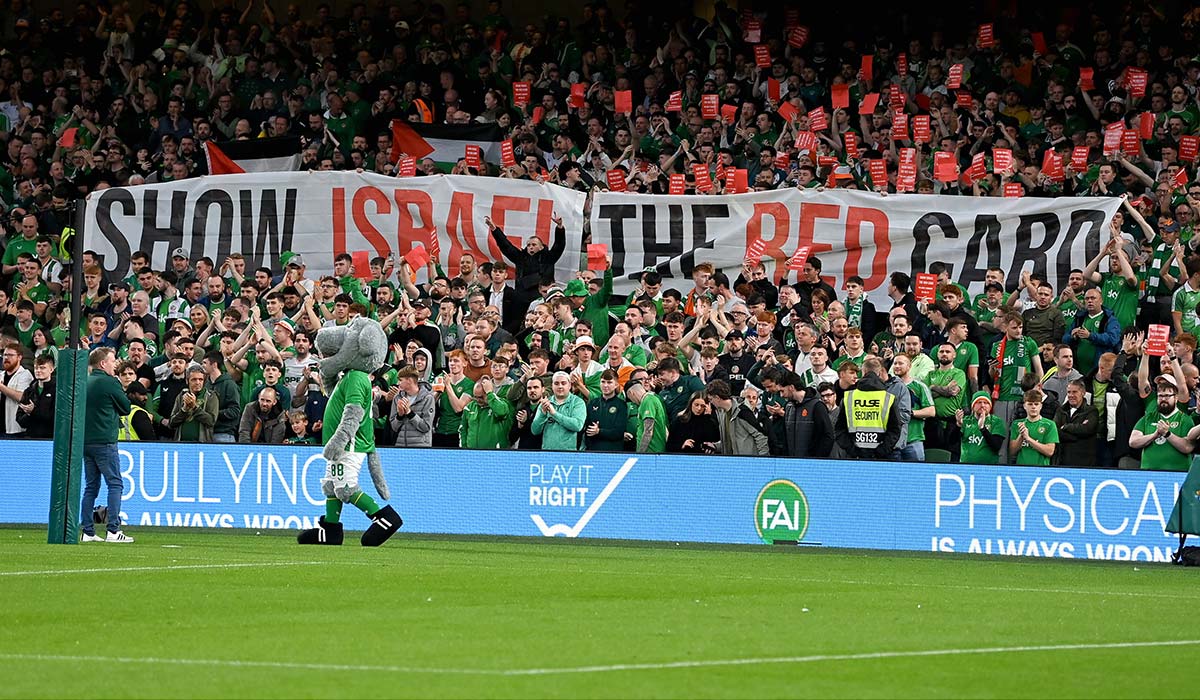

There is a growing expectation in Government that Ireland’s forthcoming soccer match against Israel will be moved outside the country amid rising security concerns.
Ireland’s players have been called upon to boycott the Nations League fixture in October, in protest at the war in Gaza.
Sports Minister Patrick O’Donovan, and Junior Sports Minister Charlie McConalogue both said yesterday they would not attend the fixture when asked if they would consider not going as a form of ‘personal protest’.
Any decision to move the fixture from Dublin’s Aviva Stadium to a neutral venue in another country rests solely with the FAI. Government sources have told Extra.ie they expect to receive confirmation that the fixture will be moved in the coming days. Minister O’Donovan hinted yesterday at the Oireachas Sport Committee that such plans were afoot.
He said: ‘From my understanding, other international organisations have gone to neutral venues and that remains an issue that the FAI have to address. But it’s a matter for the FAI.’
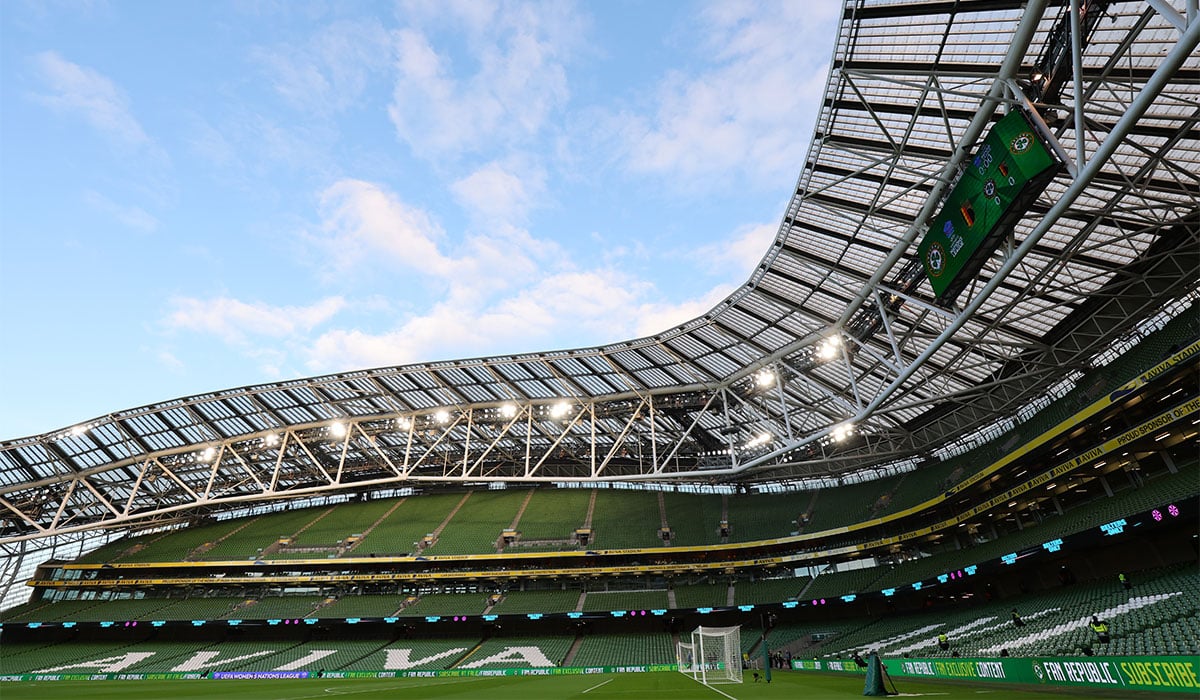
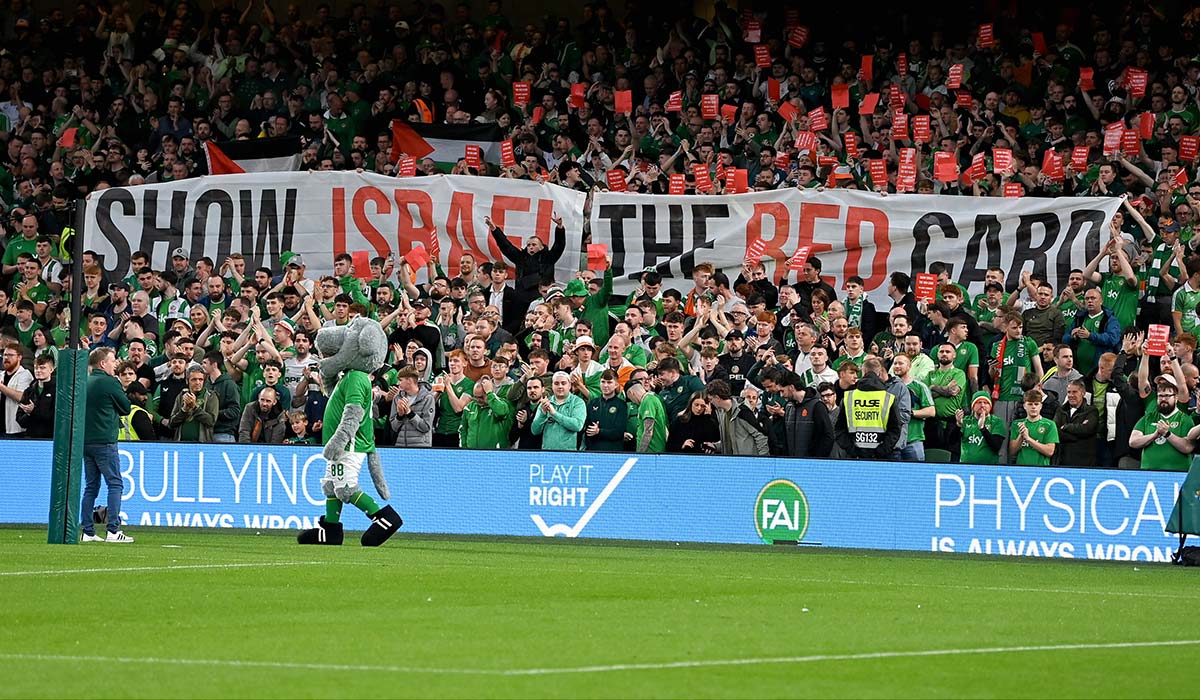
Large – scale protests are expected at the fixture should it go ahead, amid a growing campaign for the Irish team not to participate, which would cause a security headache for the Garda and diplomatic concerns for Government.
If unrest unfolds during expected protests at tonight’s game against Qatar, at the Aviva Stadium, it would support the view that the Israel game should be moved.
Security sources told Extra.ie: ‘Purely from a policing point of view, it would make sense at this stage to move the game elsewhere. Talks have been ongoing since the draw was made earlier this year. There’s going to be a policing plan in place for the game against Qatar as there is potential for protests.
‘A policing plan for the Israel game is also still in train, but the Israel game is different as there are more variables to consider. There was the idea of not allowing any away fans into the Aviva.
‘That won’t work. You saw how many Irish fans got into the home end for the Czech Republic game. Then there was another consideration that the game be held behind closed doors. That again brings its own problems, and more than likely increases the numbers who would be in and around Ballsbridge.
‘Gardaí would be expecting a huge protest around the Aviva with or without fans in the stadium. It all comes down to a case of “can gardaí ensure the protection of the public” and if it’s not 100%, then it’s on gardaí to make their feelings known to the organisers and its other stakeholders in Government.
‘This is what is being done at the moment.’
The FAI yesterday declined to comment on the matter when asked if the game would be moved out of Ireland.
In 2024, following a Champions League game between Dutch side Ajax, and Israeli outfit Maccabi Tel Aviv, in Amsterdam, 62 people were arrested and five were hospitalised when rival fans clashed over the war in Gaza.
That incident informed the controversial decision by West Midlands Police to ban Maccabi Tel Aviv fans from a Europa League fixture against Aston Villa in Birmingham last year, a move widely condemned by Jewish groups and criticised by UK prime minister Keir Starmer.
The Irish Government – often criticised internationally, in particular by the US, for its position on Israel – is keen to avoid being at the centre of a similar controversy.
Ministers O’Donovan and McConalogue said yesterday they will not attend Ireland’s game against Israel in October.
Fianna Fáil TD Pádraig O’Sullivan, a long-time supporter of the Irish football team, told the Sports Committee he would not be attending the match as a form protest. He asked the minister: ‘Is it your intention to do something the same [stay away from the match] or would either of you consider it as a form of personal protest, rather than dictating to another Government agency?
Mr O’Donovan replied: ‘I won’t be going to the match.’
Mr McConalogue said: ‘I don’t intend to attend the match either.’
Social Democrats TD Sinéad Gibney questioned why the ministers had not offered to assist RTÉ or the FAI with any sanctions that might arise from boycotting the fixture.
Mr McConalogue said they had not spoken with the FAI about helping them to cover the cost of any sanctions if they chose not to fulfil the fixture.
‘It’s a matter for them to decide upon,’ he said.
Mr O’Donovan said RTÉ had made no approach to the Government about the match, and he would not interfere in editorial decisions by the station.