
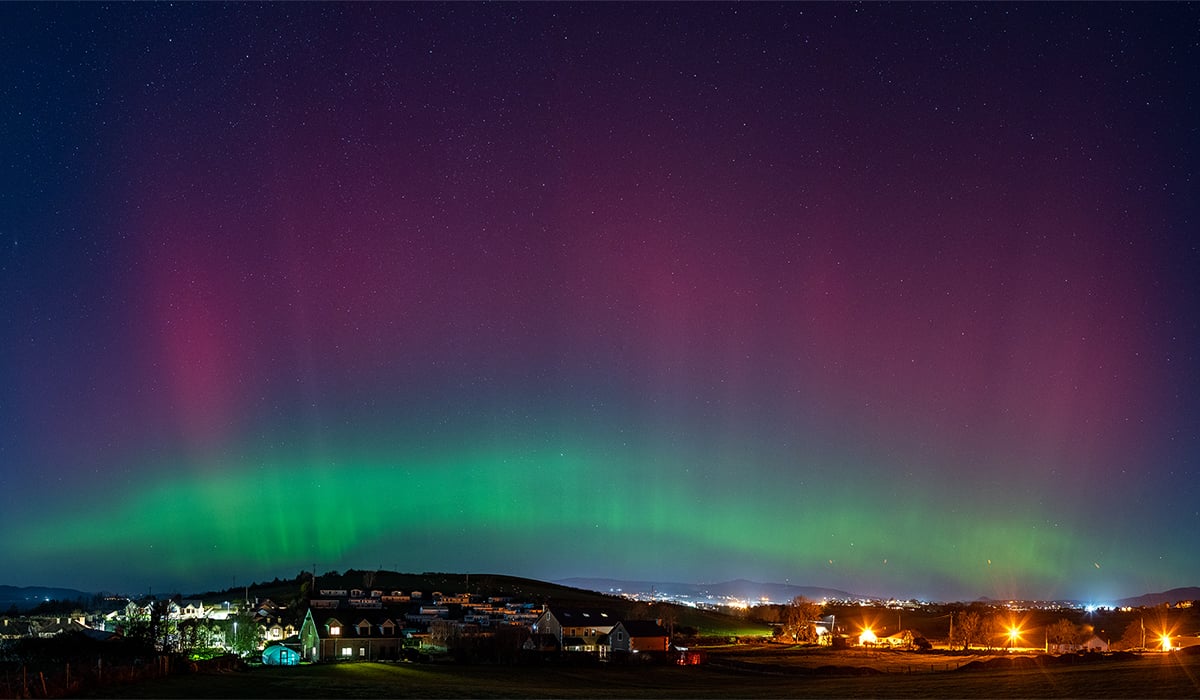

The northern lights may be visible from Ireland over the next couple of days as a powerful solar storm hits our planet.
On Thursday, five M-class solar flares hit the sun before a rarer X2.4-class event followed on Friday.
This high-level solar activity is an eruption of electromagnetic radiation in the sun’s atmosphere, caused by twisted magnetic fields.

Solar flares typically sit above sunspots, which are cooler, darker regions of the sun’s surface that form when clumps of its magnetic field well up.
While the effects of the activity are too early to predict, NASA’s orbiting Solar Dynamics Observatory tracked a cloud of super-charged particles, known as a CME, travelling in the direction of Earth.
During a CME, the particles leave the solar surface and travel across the solar system at a much slower speed than the radiation from a solar flare.
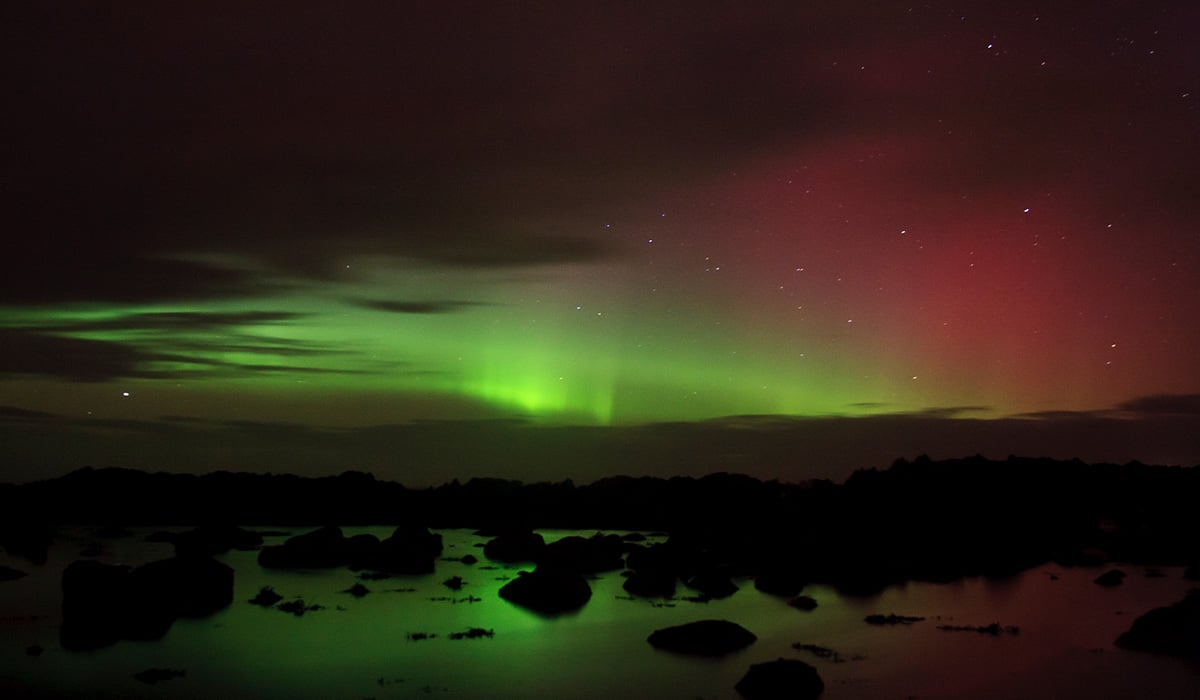
NASA also saw a comet, C/2025 R3 (Pan-STARRS), which is due to get closest to the sun on Monday.
Meanwhile, a G1-class geomagnetic storm is possible on Sunday if the CME grazes Earth’s magnetic field, according to Spaceweather.com.
This was also forecast by the National Oceanic and Atmospheric Administration (NOAA), and while solar flares don’t cause auroras, the charged particles could mean a great view of the northern lights.
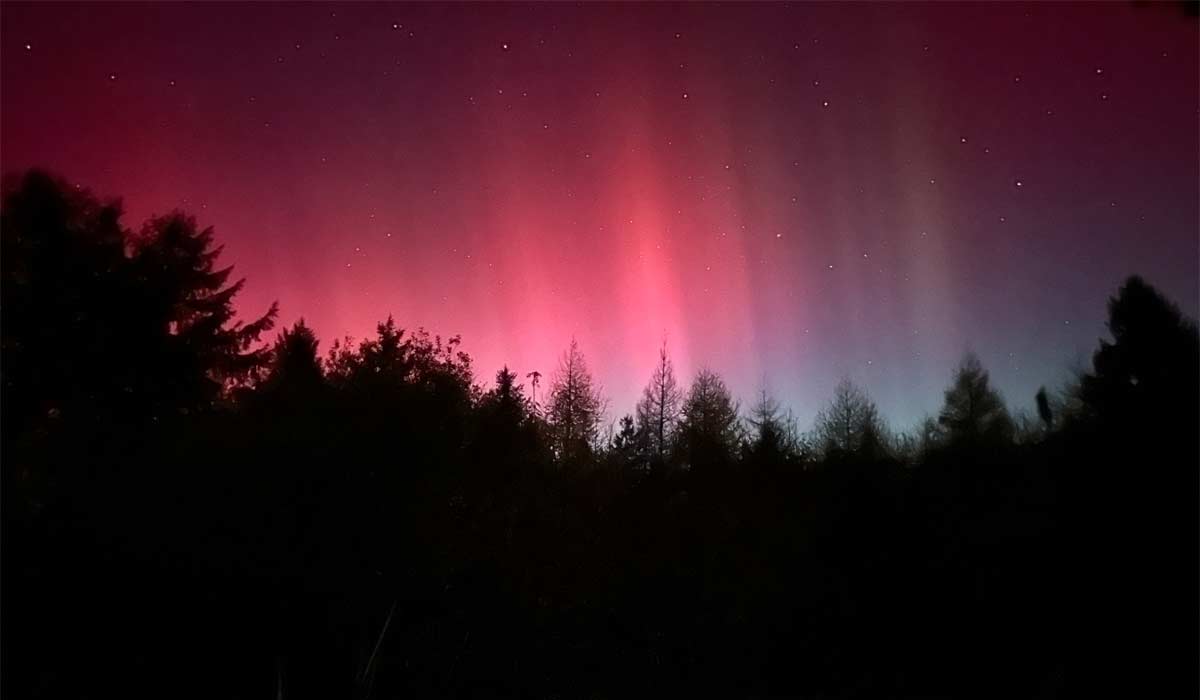
They are caused by solar wind, a constant stream of charged particles flowing from the sun that interacts with Earth’s magnetic field.
While most of these get deflected, some particles collide with oxygen and nitrogen atoms high in the atmosphere.
This leads to excited gases releasing energy as shimmering light.
Irish stargazers will be hoping to get a look at the aurora borealis on Sunday night, though it is notoriously difficult to predict.
The NOAA has a 30-minute aurora forecast, which tracks the visibility of the lights in real time.