

A major breakthrough has been announced for families living with Friedreich’s ataxia after the HSE approved funding for the drug Skyclarys this afternoon.
The decision now means that people in Ireland living with the rare and devastating neurological condition will finally be able to access the treatment through the public health service.
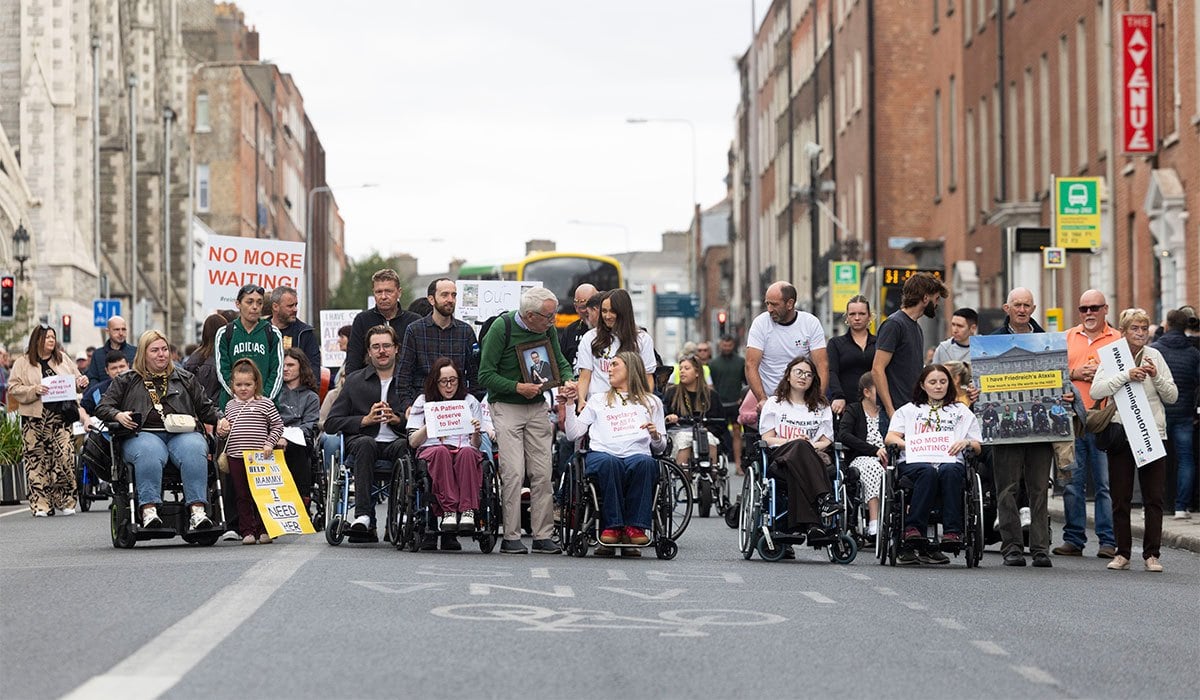
It comes after months of mounting pressure from patients, families and campaigners, and just days after an emotional demonstration in Dublin called on the HSE to give the drug the green light.

Some 200 people here in Ireland suffer from Friedreich’s ataxia, which is a rare inherited condition affecting the nervous system, affecting movement, coordination, and other bodily functions as it progressively damages a person’s nervous system.
Skyclarys is currently the only medicine authorised by the EU to specifically treat the disease in patients aged over 16. The European Medicines Agency approved it in 2024. But Irish patients have had to endure a lengthy wait for access to the life-changing medication.
The HSE Drugs Group had recommended against reimbursement earlier this month, citing concerns around the available clinical evidence and the drug’s cost.
The cost of the drug is estimated at around €280,000 per patient per year. The earlier HSE recommendation sparked fury among families who had argued that every month without treatment meant an irreversible deterioration for their loved ones who are living with the condition.
Campaigners staged a huge demonstration in Dublin on Sunday, with emotional pleas for the authorities to give patients access to the medicine.
Among those who spoke publicly was 16-year-old Paudie Coady from Cork, who has Friedreich’s ataxia and whose younger brother Rory died from the same condition last year at the age of 13.

Paudie made a heartrending call to the HSE and the Government last week, pleading for access to the drug, in a simple statement: ‘Can I have the tablet?’
His family had warned that time was running out as his condition continued to progress, but now, after months of negotiations and uncertainty, the HSE has finally delivered the news the families have been so desperate to hear. Skyclarys will be available to them and will be reimbursed.
The drug works by activating a pathway that protects cells from oxidative stress. Clinical trials have suggested it can slow some aspects of the progression of Friedreich’s ataxia, although questions over the strength of the evidence had been central to the HSE’s earlier concerns.

The decision is likely to be greeted with huge relief by families who feared they would continue watching their loved ones deteriorate while a treatment was available elsewhere.
For Irish families who have spent months campaigning, however, the debate over cost and clinical evidence has been eclipsed by something much more personal, for their loved ones living with a condition that steals mobility and independence; today’s decision marks a potentially life-changing new chapter.