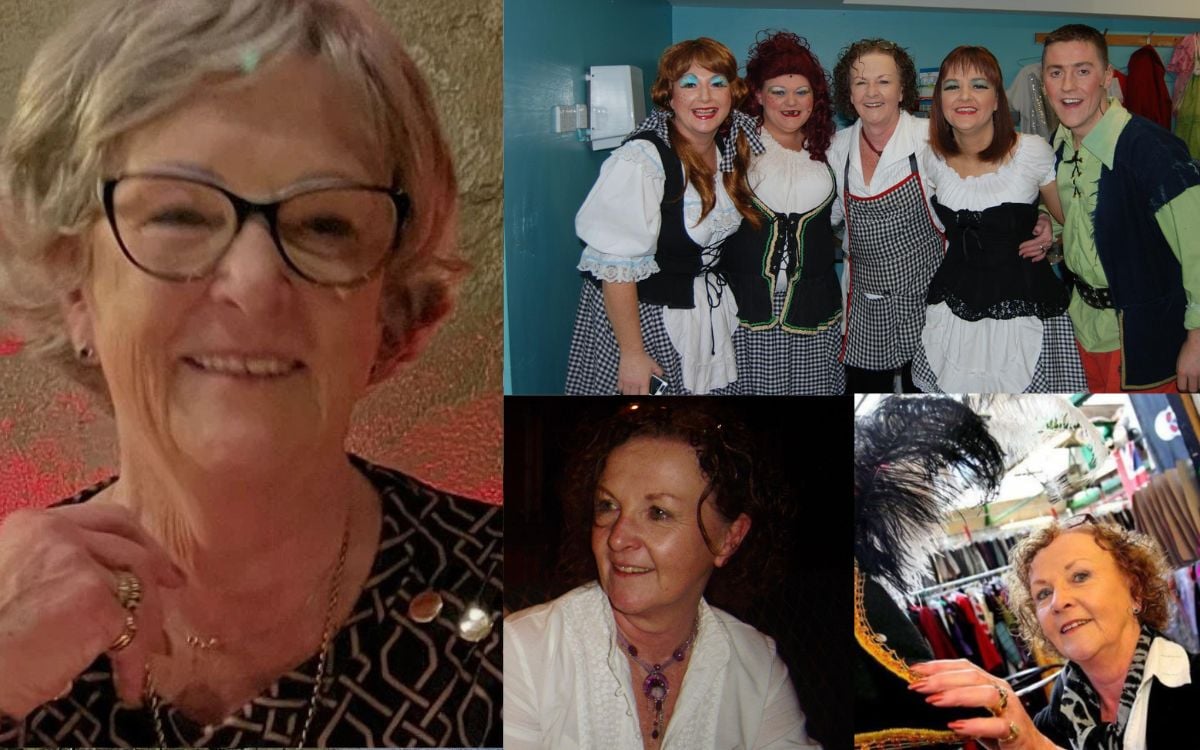


Achievement has been a constant throughout Trish Jackman’s life.
Whether on the camogie field, in athletics or through her work in sport and exercise psychology, the Waterford woman has combined natural ability with a strong work ethic and, perhaps most importantly, an endless curiosity.
Dr Patricia Jackman is now an associate professor in sport and exercise psychology at the University of Lincoln and chair of the psychology division of the Chartered Association of Sport and Exercise Sciences. She is also a registered sport and exercise psychologist.
But long before her academic career took off, Jackman was making her mark in camogie.
She made her Waterford debut at just 15 in 2007 and went on to become a key player as the county progressed from premier junior to senior level.
She won All-Ireland senior titles with Waterford in 2011 and 2015, while 2015 also saw her claim the seventh of seven consecutive M Donnelly All-Ireland Poc Fada titles.

That remains a record, although Cork’s Molly Lynch will attempt to equal it in 2027.
Jackman also won five Ashbourne Cup titles with Waterford IT and became the first woman to be named Waterford GAA Player of the Year, an honour Beth Carton has since added her name to.
Away from the pitch, her academic career was developing rapidly.
In 2015, Jackman began her PhD at the University of Lincoln. She continued to play senior camogie, but the demands of travelling between Waterford and England eventually became too much.
She returned to the Waterford panel in 2019, by which stage she was lecturing at her alma mater, but an 11-hour round trip was not sustainable.
She continued playing club camogie and played an important role in a memorable All-Ireland intermediate final.
With time running out, her sister Úna scored an injury-time goal to put Gaill Tír ahead of St Rynagh’s, before Trish followed up with a pointed free to seal the victory.
Covid ultimately brought the curtain down on her camogie career, despite her still being in her 20s.

Rather than stepping away from sport altogether, however, Jackman found another challenge.
She took up long-distance running and completed a 40-mile ultramarathon.
Then, earlier this year at the age of 35, she made her international track debut for Ireland at the European 10,000m Cup in Italy.
It was another unexpected chapter in an already remarkable sporting journey.
“I don’t know if it’s competitive Trish or just curious,” Jackman says when asked whether she now wants to see how far she can go in athletics.
“I think I’m just curious to see where the limit is and to explore a little bit more.”
That curiosity has also been central to her professional life.
Jackman’s research has received funding from organisations including WADA, UKAD, Innovate UK and the Australian Research Council, while her work has influenced policy and practice at national and international level.
Her latest work has focused on women in sport on the island of Ireland.
Jackman was involved in the first collaborative study by Míde Research examining the existing literature on women in sport.
The scale of the project was considerable, with 274 studies examined across areas including injury, sporting performance, health and wellbeing, society and culture, and coaching and professional practice.
There were also 582 respondents, including athletes, coaches, parents, researchers, policymakers and members of the wider community.
Eight key areas emerged as priorities for future research, including retention and dropout, participation opportunities, menstruation, the benefits of physical activity, injury risk and recovery, supporting activity across the lifespan, tailored support for active women and girls, and coaching women and girls.
“It was really enjoyable just to see the extent of the work that had been done,” Jackman says.
“I think it was really informative to see the trends, given that we had such a volume of work. You can really start to see some patterns.”
The intention is not simply to produce another academic paper.
Jackman wants the research to have a practical impact on athletes, coaches, policymakers and organisations.
She believes one of the biggest challenges in sport is closing the gap between research and what actually happens in the real world.
“We often see academic research being published, but then there’s a gap in that it doesn’t necessarily change anything,” she explains.
“What we’re really trying to do is make sure that it doesn’t just stop with the academic publication. It continues, and that’s only the starting point of conversation and dialogue.”
That approach is also at the heart of Síol na nÓg, a project examining how psychological principles can help create healthy and productive environments for young Gaelic games players.
The work grew from research into applied sports psychology and Gaelic games and an examination of the existing literature.
While there was already valuable research around areas such as coaching underage players, Jackman felt something was missing.
There was a need to bring that research together in a way that coaches could actually use.
Six principles were identified through Síol na nÓg: promoting holistic development, creating a learning environment, developing coach-player relationships, optimising the motivational climate, building togetherness and belonging, and emphasising fun and enjoyment.
Jackman has been working with the GAA on the project, with further resources expected to become available to coaches.
For someone who spent so much of her life competing at the highest level, the focus is now increasingly on helping the next generation enjoy their own sporting experiences.
And perhaps that brings her career full circle.
Jackman has previously spoken about being fascinated by sport from a young age, recalling how she could come off the pitch after a defeat and still view the experience as “magical”.
That curiosity began with her own experiences in camogie and basketball before expanding to wondering what other athletes were experiencing.
It remains the driving force behind her work today.
And it is also what has taken her from the camogie field in Waterford to the athletics track across Europe.
Her first experience of track running only came this year, when she put on spikes in Waterford.
“I was the oldest novice, I think,” she jokes.
She is now officially a veteran athlete, having turned 35, and admits that her first international appearance was something of a baptism of fire.
“It was really warm on the day, and it was definitely a baptism of fire for me,” she says.
She learned plenty from the experience, particularly when it came to the tactical side of track racing.
But there was also the excitement of representing Ireland and sharing the experience with athletes she had previously admired from afar.
“I was a little bit starstruck to be honest, but it was really enjoyable, and everyone was really welcoming.”
For Jackman, though, there is no grand declaration about what comes next.
Instead, there is simply that same quality which has been present throughout her life which is Curiosity.
Whether through research, coaching, camogie or running, Trish Jackman continues to ask the same question: how far can she go?
And, for now at least, she is enjoying finding out.