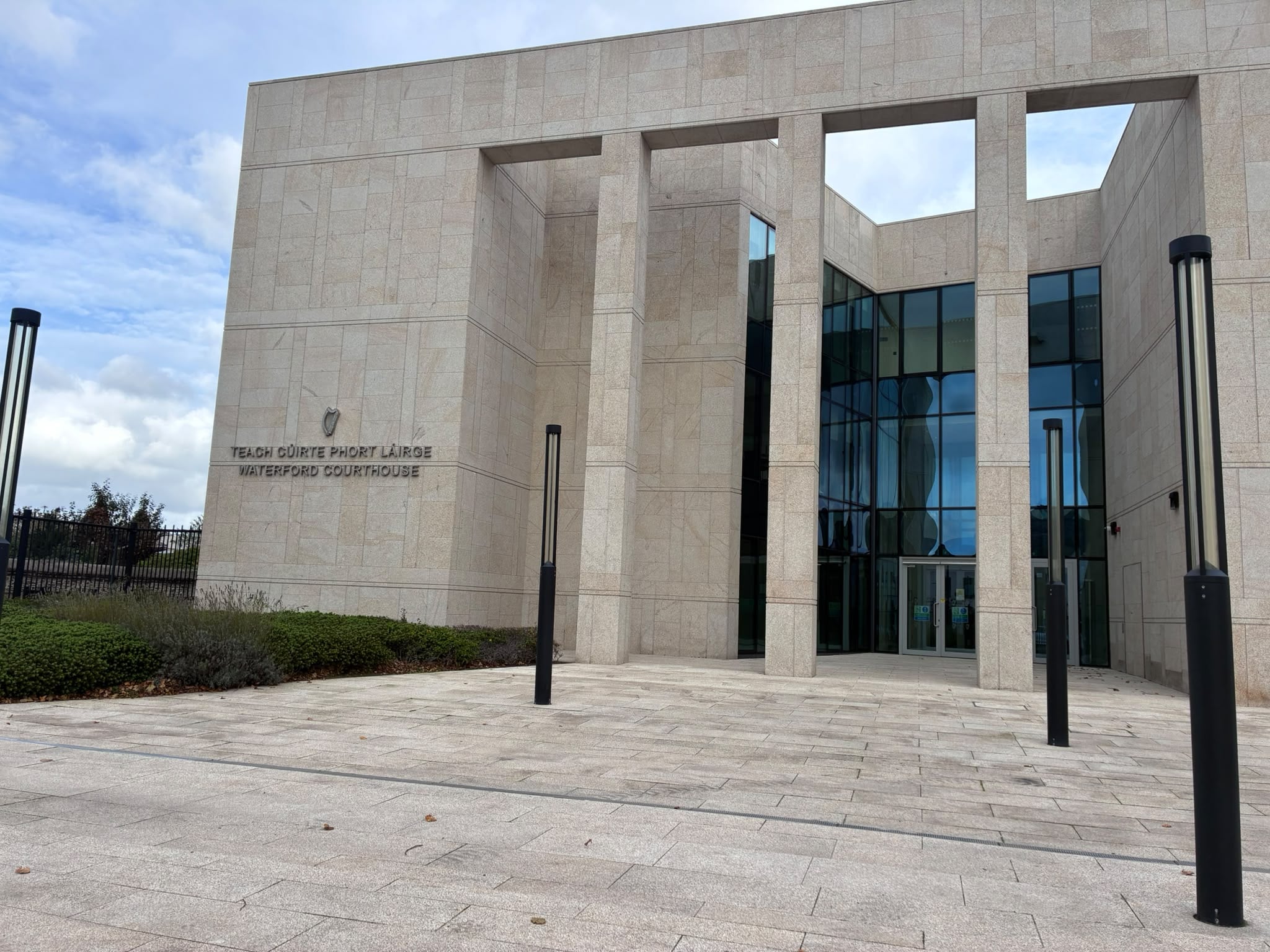

A former Waterford school principal and priest has been jailed for three years and three months for sexually abusing a young boy while working at a primary school in Waterford in the late 1970s.
91-year-old Con Desmond , also known as Brother Cornelius, was sentenced at Waterford Circuit Criminal Court following his conviction on Tuesday on nine counts of indecent assault.
The offences took place between 1978 and 1980, when the victim was in second class going into third class at St Stephen’s De La Salle Primary School, where Desmond was principal.
Abuse at Waterford primary school
The court heard that Desmond abused his position of authority over the young boy, subjecting him to repeated sexual and physical abuse.
The victim initially did not understand what was happening and was confused by the abuse.
The court also heard that the victim was physically assaulted, including being struck with a metre stick between the ages of seven and nine.
The abuse left the young boy so frightened that he avoided using the school toilets.
Victim impact statement
In a victim impact statement, the victim described the lasting consequences of the abuse, saying he lost respect for authority and later went down a difficult path involving drug abuse.
The victim also said the abuse had a significant effect on his life and personal relationships, with his partner unaware of what had happened to him as a child.
He told the court that during the Covid-19 pandemic, he had time to reflect on his experiences.
Seeing his own grandchild begin attending the same school brought back painful memories, which he described as being like “switching bodies”.
Judge Eugene O’Kelly granted the victim full anonymity to protect his identity.
The judge later praised the victim’s bravery in coming before the court.
Garda investigation
Detective Sergeant Finbar O’Sullivan of Waterford Garda Station gave evidence about the investigation.
He told the court that Desmond became extremely aggressive when gardaí attempted to interview him about the allegations.
The court heard that Desmond threatened Gardaí.
Detective Sergeant O’Sullivan said Desmond later became uncontactable by mobile phone during the investigation.
The court also heard that Desmond refused food and liquids while in custody during the course of the trial.
Desmond denied the allegations and maintained his innocence throughout the proceedings, describing the victim as “troublesome”.
Previous convictions
Desmond became principal of St Stephen’s De La Salle Primary School in Waterford in 1977 and remained in the role until 1984. He later became a priest in County Clare in 1989.
He has two previous convictions arising from separate complaints of abuse involving pupils at the school.
In 2006, Desmond pleaded guilty to six counts of indecent assault involving a boy aged between 12 and 13. He received a three-year fully suspended sentence.
In a separate case in 2013, he was found guilty by a jury of 13 counts of indecent assault involving another pupil between 1977 and 1982.
He received a two-year prison sentence.
Sentencing
In sentencing, Judge O’Kelly described the offending as extremely serious, placing it towards the upper end of the scale of abuse.
The judge said Desmond had abused his position of power at a time when he was supposed to protect the child, but instead continued to abuse him.
A headline sentence of five years was imposed on each count. The final year was suspended, with a further nine months deducted to reflect mitigating circumstances.
Desmond will serve three years and three months in prison. The suspended portion is subject to him entering into a €100 bond following his release.
The court heard that Desmond was a frail man in his 90s, with a letter from his doctor outlining acute kidney problems and a history of depression.
Defence barrister Gareth Hayden BL, instructed by solicitor Evan O’Neill, told the court that his client was approaching the end of his life and hoped for some light at the end of the tunnel.
Judge O’Kelly acknowledged Desmond’s medical difficulties but noted the absence of remorse. He also referred to the decision to put the victim through cross-examination during the trial.