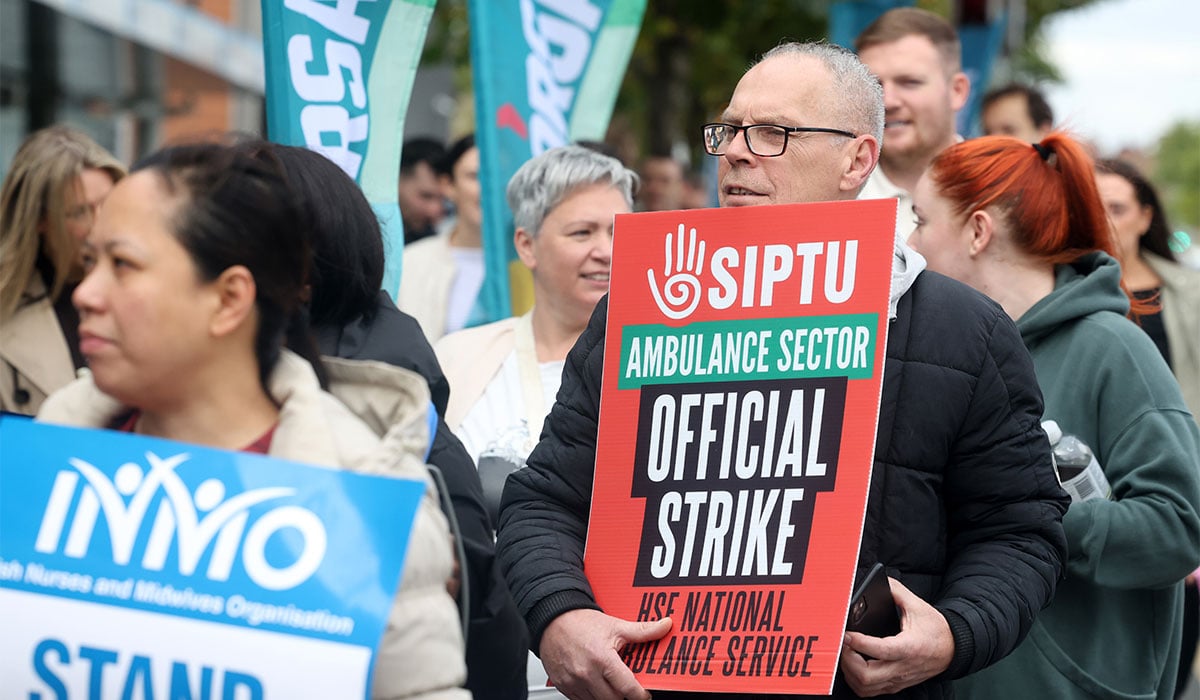

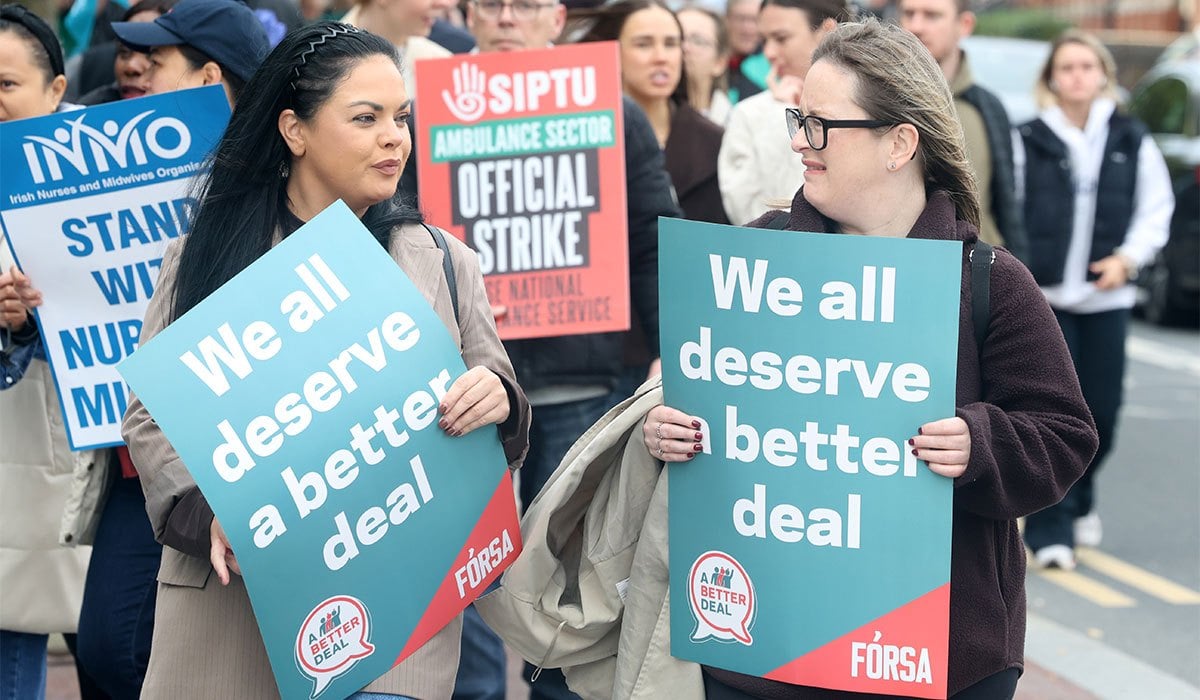
Plans for a public sector strike on Thursday have been put on hold after trade unions agreed a new draft pay deal with the Government.
The proposals, which impact over 400,000 public servants, will deliver pay increases of 10.75% over two years and nine months in a deal that will run to March 2029.
Talks concluded at the Workplace Relations Commission (WRC) at around 3.30am.
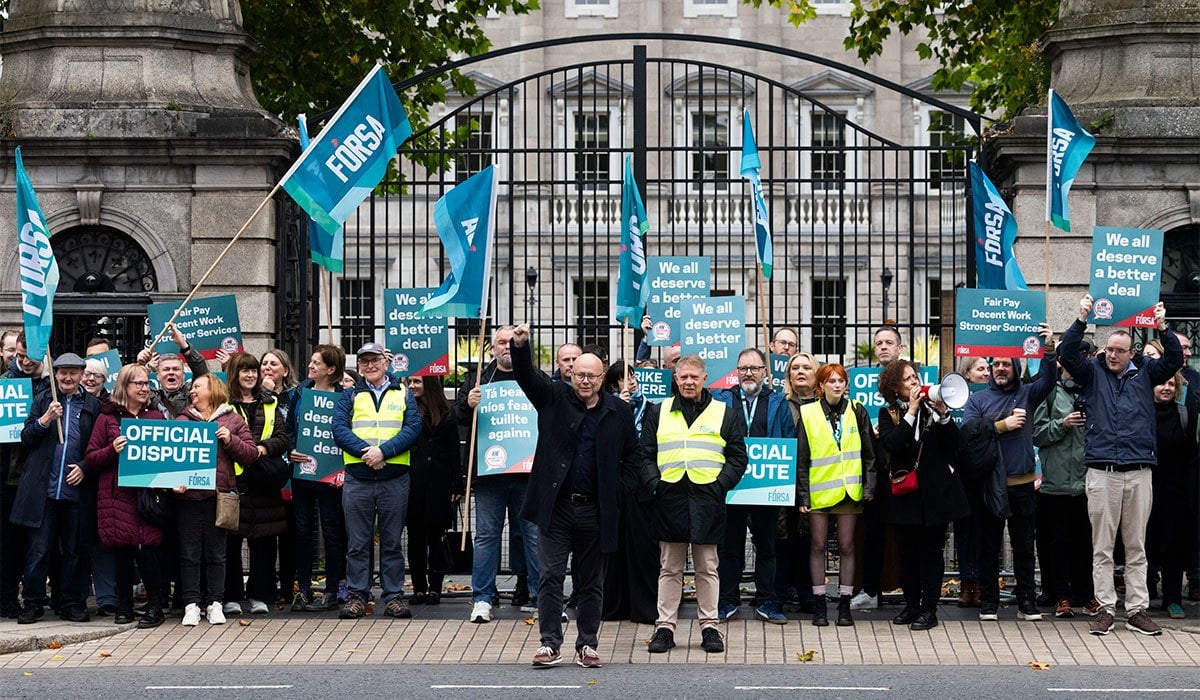
The draft agreement includes pay rises worth 9.75pc over 33 months, plus another 1pc for local bargaining increases.
The proposal includes an initial 2pc pay rise backdated to September 1 and higher increases for lower-paid staff.
Negotiators on Tuesday night were hammering out the final non-pay elements of the deal as pressure mounted to reach an agreement before Thursday’s planned stoppage.
Under the deal, pay increases will be implemented along the following timeline.
2026
September 1 – 2pc or a minimum of €1,200, whichever is the greater.
2027
April 1 – 1pc pay rise.
August 1 – 1pc or a minimum of €600, whichever is the greater.
November 1- 1.5pc or a minimum of €900, whichever is the greater.
2028
March 1 – 1pc pay rise.
June 1 – 1pc pay rise or a minimum of €600, whichever is greater.
October 1 – pay rise of 1pc.
2029
March 1 – second phase of ‘local bargaining’, worth 1pc.
March 2 – 1.25pc pay rise or a minimum of €750, whichever is greater.
Following the negotiations, the Public Services Committee of the Irish Congress of Trade Unions (ICTU) has recommended that unions suspend strike action and other industrial action, including ongoing work-to-rules, to allow unions to consider the document and arrange ballots.
Speaking to reporters outside the WRC, chair of ICTU’s Public Services Committee and Fórsa General Secretary Kevin Callinan said the negotiations have been difficult.
‘Based on what we know about inflation, it is ahead of the projections over the period, so we’re pleased about that,’ Mr Callinan said.
‘We’ve made some progress, but we are in uncertain times, and one of the important things in the agreement is that there is a review clause in the event that inflation was to spike again.
‘This has been a really difficult process. I think it will take more than a pay offer to rebuild the trust of public servants with the government,’ he added.
Unions will now ballot their members on the pay proposals with the votes to conclude early in the week beginning 7 December.
SIPTU Deputy General Secretary Adrian Kane said it was unfortunate that it took so long to reach a pay deal.
‘That was because the offer that the Government put on the table some weeks back was just not credible,’ Mr Kane said.
INMO General Secretary Phil Ní Sheaghdha thanked the WRC and Government Appointed Group for their assistance.
‘There were times when we didn’t think we would have proposals to members,’ Ms Ní Sheaghdha said.
‘Ultimately, the deciders of whether it is a good agreement or otherwise is those that will have a vote.’
INTO General Secretary John Boyle said there are measures in the agreement aimed at addressing recruitment and retention issues in the education.
‘There are a lot of measures in the agreement that will improve opportunities for young workers in teaching and SNAs [special needs assistants] to maybe dream for home a one day, have less work intensification and have smaller class sizes,’ Mr Boyle said.