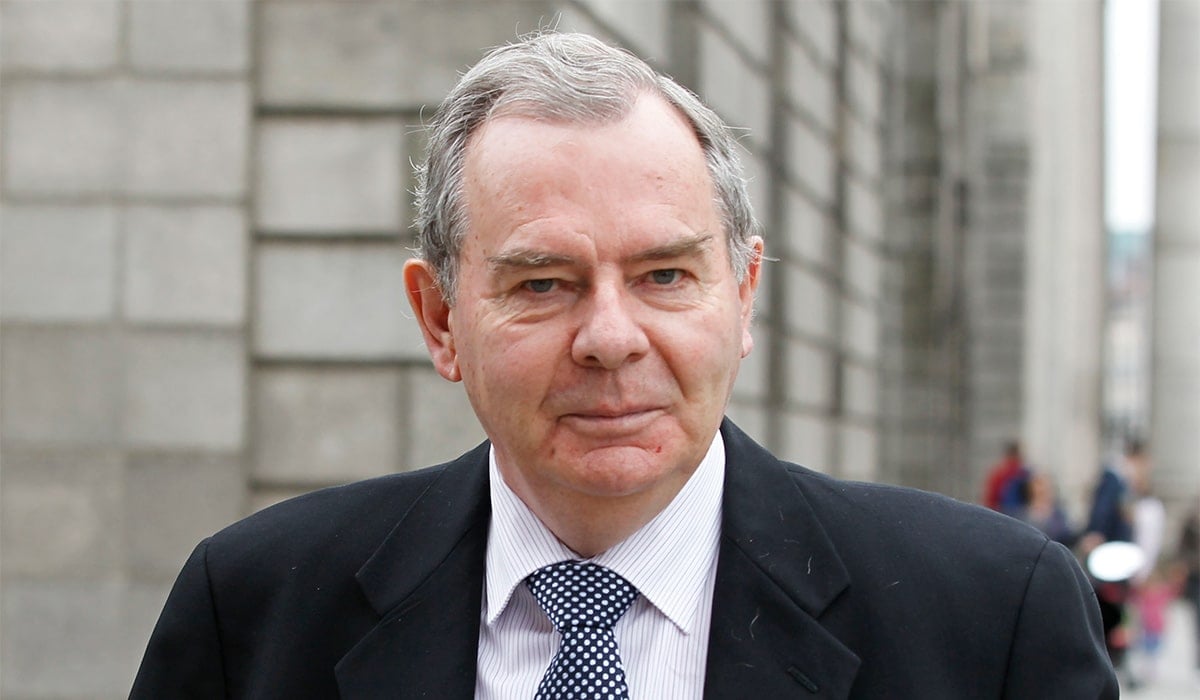

Disgraced businessman Seán Quinn has alleged there was a ‘major cover-up’ by the government in relation to how it handled his assets.
The former billionaire is set to release a podcast series in which he seeks to ‘put the true story on record’ about his dramatic fall from grace. And in a defiant interview, he insists: ‘I was f***ed over by people against me.’
Once Ireland’s richest man, Mr Quinn built up a 28% stake in Anglo Irish Bank during the Celtic Tiger – but its near collapse after the 2008 financial crash wiped out at least €2.8billion of the family’s wealth.
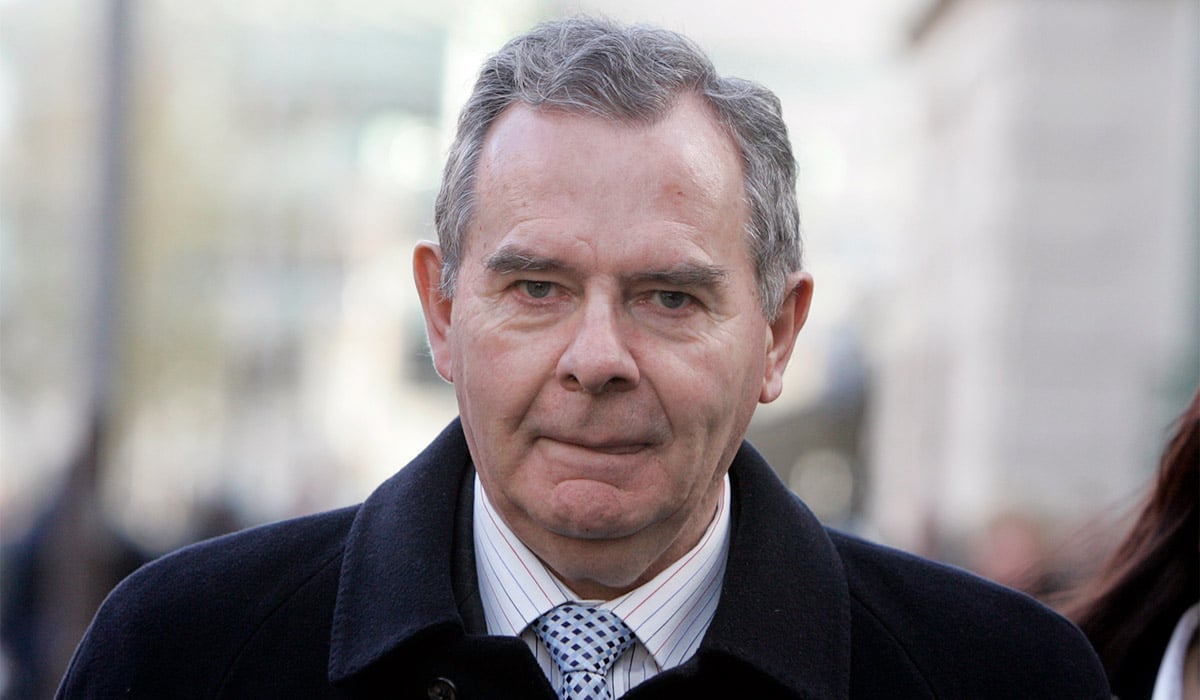
Controversy has dogged Mr Quinn ever since over the methods he used to purchase the shares, and the so-called ‘Golden Circle’ that bought them from him using a €451million loan they received from Anglo itself.
In 2011, he lost control of his business empire, and it passed into the hands of the IBRC, a State-owned bank formed by a court-mandated merger of Anglo Irish Bank and Irish Nationwide Building Society. Mr Quinn declared bankruptcy and his family were then engaged in protracted legal issues for the rest of the decade.
He has long claimed that he was the victim in the whole incident. In the new interview with his local paper in Co. Cavan, the Anglo Celt, Mr Quinn makes one last bid at restoring his reputation, insisting: ‘I was f***ed over.’
He told the paper: ‘I’ll turn 80 in a few weeks’ time. I think there’s an onus on me to let the public know [what happened]. What I’m saying here and now, with 100% clarity, there was a major cover-up from the government.’
He confirmed that he was telling his story via a new podcast for his ‘grandkids and great-grandkids’, adding: ‘Correct… For everyone to know. I was f***ed over by people against me.’ He later apologised for his ‘crude’ language.
‘I’ve been through it all, with the media, the courts, Anglo, and the government. It’s all come on top of me the last 15 years. I’m now entering the final years of my life and I feel very strongly that I put the true story on record. I was offering them back the whole €2.8billion. So whatever they have recovered, they have recovered,’ he said of the State’s asset recovery operation.
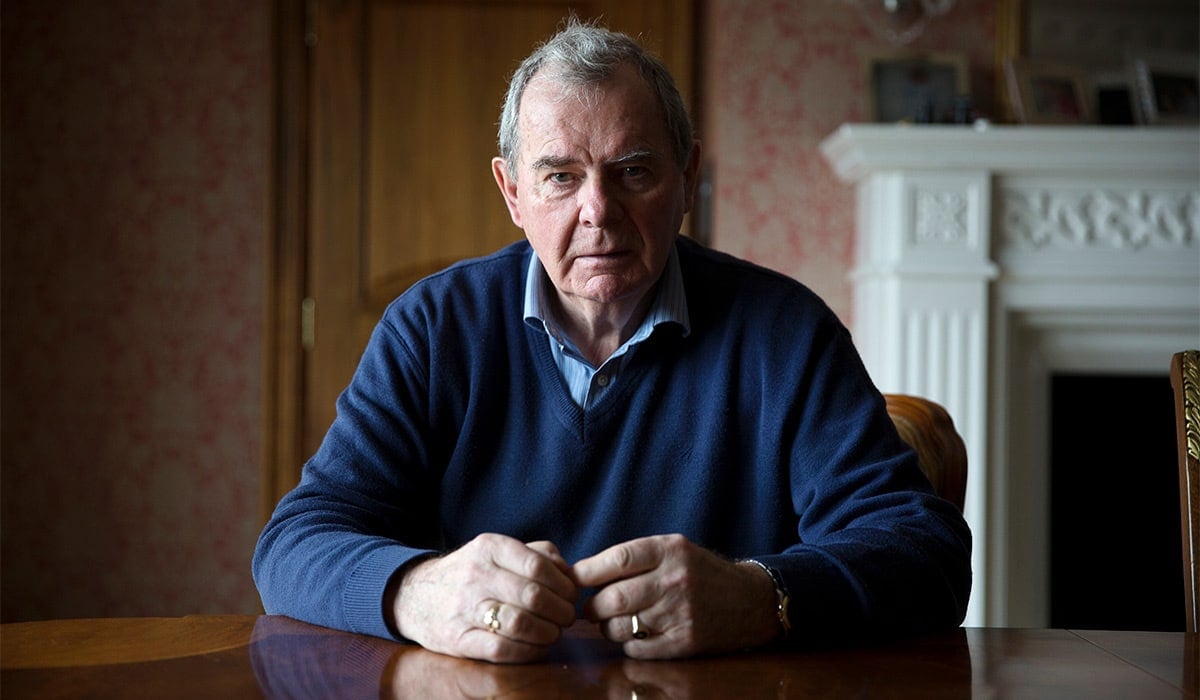
‘But they wouldn’t take it. I want people to know that is what happened to me. There have been an awful lot of people who have been supporters of Seán Quinn. I know there has been an awful lot more against him. Staying silent on it is not the answer either. Where is my justice?’ he asked.
The move by Mr Quinn to tell his version of events through a new podcast and a website is the latest in a series of public interventions to reclaim the narrative around him and his family.
He has already written a memoir and participated in a documentary about his time as head of the Quinn Group.
In 2019, Kevin Lunney, appointed as director of Quinn Industrial Holdings (QIH) after Mr Quinn lost the company, was kidnapped by a gang of men and tortured. Mr Lunney, 52, told the Special Criminal Court that the gang carved the letters ‘QIH’ into his chest using a Stanley knife, and told him ‘so you remember why you’re here’ as they did so.
He told the court how he had his leg broken, was disfigured with a knife and doused in bleach in the two-and-a-half-hour ordeal on September 17, 2019. His captors repeatedly threatened to kill him if he did not resign, along with three other board members, and he was told to drop a number of injunctions and defamation cases he was involved in.
The mystery ‘paymaster’ who funded the abduction and assault was never unmasked, but the court warned they would face life in prison if convicted. Mr Quinn has long denied any involvement with the incident.
In an interview with RTÉ in 2023, he said he had visited a local priest to confront him over comments made from the pulpit, which he believed wrongly identified him as the ‘paymaster’. Fr Oliver O’Reilly had said ‘the paymaster needs to be brought to justice’ but did not name Mr Quinn. The comments were picked up by the media.
Mr Quinn told RTÉ: ‘I said, “Father, you’re wrong – wrong – and you’ve done me and my family an awful lot of damage. I want to know how you came up with this or where you came out of”.’ Mr Quinn told Miriam O’Callaghan: ‘He made up his mind that I was involved somewhere along the line, that if I wasn’t actually involved in the kidnapping, I was paying for it.’
In his interview with the Anglo Celt, Mr Quinn said he has a ‘bit more detail’ in his new podcast in addition to what he said in his recent book and documentary. He said he wanted to see his version of events preserved for a digital future.
‘I’m not trying to be some sort of maverick or anything doing it,’ he said. ‘But in years to come, it won’t be Seán Quinn sitting and arguing about whether this should have happened or that should have happened, the other should have happened.’
Mr Quinn has also launched a website to help document his version of events. It says that he was one of Ireland’s most ‘recognised entrepreneurs and business leaders’ that ‘transformed’ the border counties, adding: ‘Over several decades, he developed the Quinn Group into one of Ireland’s largest privately owned companies, with operations spanning manufacturing, construction products, packaging, hospitality, property, and insurance.’
On his involvement in Anglo Irish Bank, Mr Quinn admits to having made ‘mistakes’. He states: ‘I accept that I placed too much trust in Anglo Irish Bank. That was my mistake. ‘However, I remain convinced that the actions taken by the Irish government during the banking crisis, including the closure of the banks from lending, were the reason for the collapse of the Irish banking system and, ultimately, the destruction of the Quinn Group.’
The website adds: ‘Seán Quinn believes there are aspects of this period that deserve continued public examination, while recognising that others involved have expressed different perspectives. This website is not intended to revisit matters that have already been determined by the courts.
‘Instead, its purpose is to document Seán Quinn’s experiences, preserve an important chapter of Irish business history, and contribute to informed public discussion about entrepreneurship, the financial crisis, and its lasting impact on businesses, communities, and the wider economy.’
The site also carries a disclaimer stating: ‘This website contains Seán Quinn’s personal account of events together with references to publicly available documents, audio files, court judgments and official records.
‘Where opinions or interpretations are expressed, they represent Seán Quinn’s views unless otherwise stated. Many of the matters discussed remain the subject of differing opinions and interpretations.’