
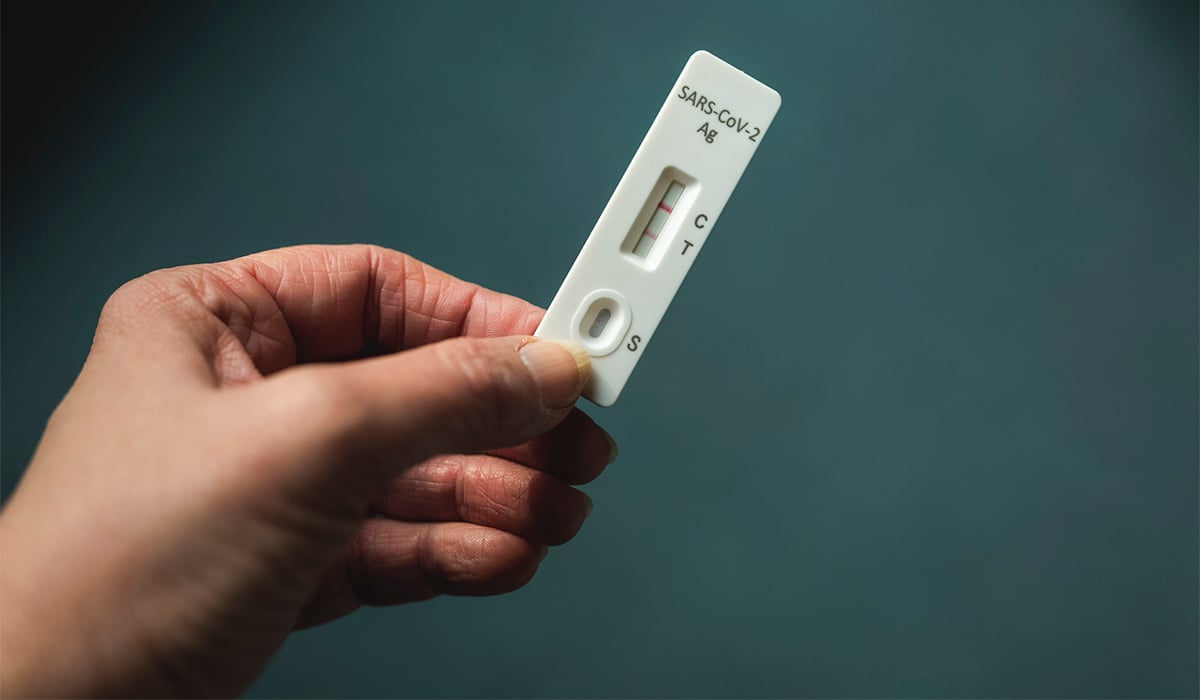

The HSE has issued a warning after cases of ‘American Covid’ caused a surge in Irish hospitalisations.
The new dominant strain of the virus has spread quickly in the USA, earning the nickname, though it is officially known as the Omicron strain XFG or Stratus.
It has since spread to many countries around the world, including Ireland, where it currently accounts for 55% of all tested cases.

The HSE recorded 479 cases of Covid in the most recent week, up from 319 the week before and 277 the week before that.
Recorded figures are only the tip of the iceberg as regular testing is no longer carried out, with hospitalisations telling a strong story.
In the most recent week at the end of September, there were 187 hospitalisations and one death.

The XFG strain has been known since last year, but has only become dominant in many countries recently.
Writing in NowPatient, pharmacist Daniel Cheung highlighted a key symptom of the strain that people should look out for.
He said: ‘The key symptoms and most noticeable symptoms of the Stratus variant include hoarseness, scratchy/raspy voice, which is considered a unique symptom distinguishing it from other Covid strains.’

Cheung added that other symptoms include a dry cough, sore throat, fever, fatigue, muscle aches and a loss of sense of taste and smell.
Meanwhile, Dr Renée Hoenderkamp told the Mail that Covid patients are now noting sore throats, headaches, runny noses and fatigue.
She explained: ‘In the past 10 days to three weeks in general practice, my lists have definitely changed to people with these symptoms… It’s very flu‐like, actually, which is probably the fairest way to describe it.’
The HSE has warned that those who take a test and are positive should stay at home and avoid contact with other people for five days.
They advised: ‘You can leave home after five days if your symptoms have fully or mostly gone for the last 48 hours.’
Those who tested positive should also avoid meeting people who are at very high risk for 10 days after their first symptoms.