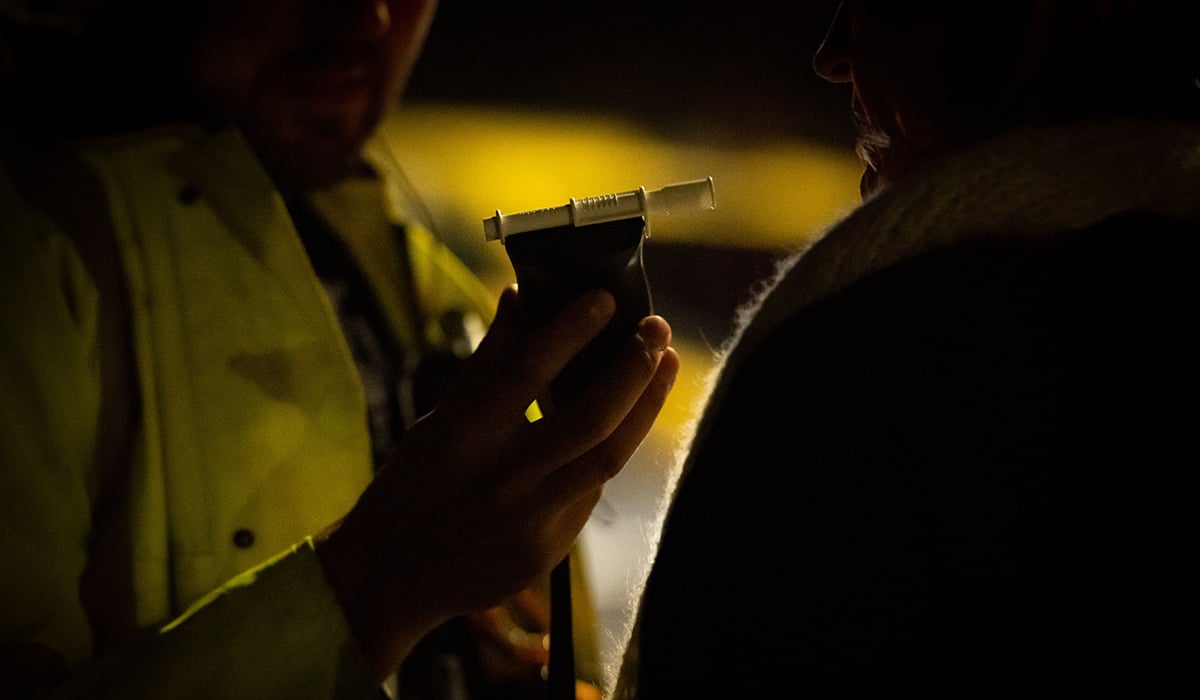

A driver was arrested six times by gardaí last year on suspicion of intoxication while driving, the latest figures have shown.
The 2025 annual report for the Medical Bureau of Road Safety (MBRS) also revealed the youngest male driver arrested on suspicion of driving under the influence was 14, and the oldest was 95.
The youngest female driver arrested on suspicion of driving while intoxicated was 16.
The report also showed the highest alcohol level found in blood in 2025 was 450mg/100ml – which is nine times over the legal limit for fully licensed drivers, which is 50mg/100ml.
MBRS director Professor Denis Cusack stated that the concern and public safety danger around repeat and high-risk intoxicated driving offenders remains to be addressed legislatively, in the prosecutorial and judicial process.
The report stated that ‘the level of recidivism detected remains significant with 237 drivers arrested twice in 2025’.
In addition to the driver arrested six times in 2025, 12 drivers were arrested four times and 28 were arrested three times.
MBRS chair Sean Quigley said it is an unfortunate reality that alcohol and drugs continue to play a huge role in accidents, in many cases causing fatalities.
Professor Cusack said that in 2025, 185 lives were lost in road collisions in Ireland, while in the region of not less than 1,500 serious injuries were suffered arising from collisions on our roads.
All samples are sent by gardaí to the MBRS for analysis, and Professor Cusack said the number of specimens received in 2025 for alcohol analysis surpassed 6,000 for the first time in decades.
The total of 6,087 is a 3% increase on the 5,900 specimens in 2024. The number of toxicology blood and urine specimens analysed last year totalled 4,477, which was an increase of 129 on the 4,348 specimens analysed for drugs in 2024.
The number breath-tested last year was 3,257, which was down 323 on the 3,580 in 2024.
Professor Cusack said: ‘Alcohol remains the greatest single intoxicant in drivers by number. The median alcohol level in blood in 2025 was 157mg/100ml when the specimens with no trace of alcohol were excluded.
He added: ‘These figures have sadly changed very little over the past decades with more than 68% of drivers with alcohol confirmed in 2025 having a level in excess of 100mg/100ml of blood.
‘Alcohol-intoxicated driving thus remains a very large and significant danger on Irish roads with so many driving when several times over the legal limits for the different categories of driver, including the lower limits for the learner, novice and professional or heavy vehicle driver.’
Professor Cusack said that the three most commonly detected intoxicant drugs in 2025, other than alcohol, were again cannabis, cocaine and benzodiazepines. He said the mean level of cannabis and cocaine found in samples continues to be multiples of the set legal limits and continues to reflect the high levels found in drug-intoxicated drivers.
He said ‘the frequent finding of combinations of drugs and drugs with alcohol remains of enormous concern, and the types of drugs used is constantly changing’.
Mr Quigley said data shows there has been a significant increase in the presence of cocaine, up from 43% in 2019 to 58% in 2025. The presence of cannabis has dropped to 55% in 2025, down from 66% in 2019.
The statistics show that driving while under the influence is predominantly a male problem, with males accounting for 85% of blood and urine samples in 2025 and females accounting for 15%. Of the arrested male drivers, 78% were aged under 45.