
Irish rugby fans are well used to seeing Hollie Davidson in the middle, but this Saturday marks a new height for a referee who continues to break barriers.
Her appearance as referee for Ulster v Cardiff two weeks ago was her 26th game in charge in the URC. She also ran the line for Munster’s dramatic Champions Cup defeat to Castres in January.
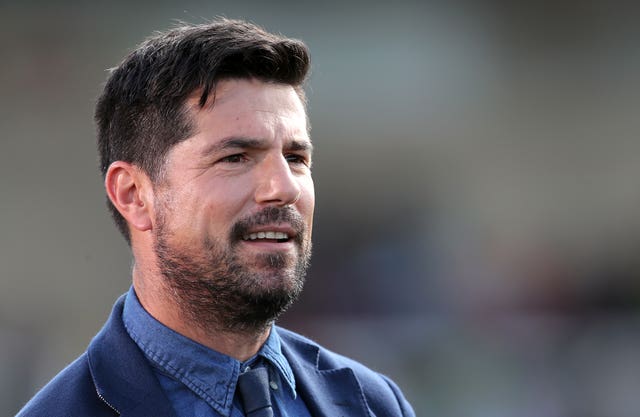
Now, the 33-year-old Scot returns to Dublin to make history. She will become the first woman to referee a men’s Six Nations match when she blows the whistle at 2.10pm for Ireland v Italy at the Aviva Stadium.
It has been a tough road for the former Scotland Under-20 international, who narrowly missed out on a senior cap because of injury.
Refereeing is never easy, and that challenge grows in a sport still dominated by men.
Ireland’s Joy Neville paved much of the way. The former Limerick star and 2013 Grand Slam winner became the first woman to referee a Challenge Cup match in 2017 and a Pro14 game in 2018. She also served as a television match official at the men’s World Cup in 2023.
While Neville opened doors, Davidson has stepped through them at the highest level. Saturday’s appointment adds to a remarkable résumé that includes refereeing the last two Women’s World Cup finals and taking charge of Wales v New Zealand in the Autumn Nations Series last November.
Her refereeing journey began in 2015, shortly after a shoulder injury ended her playing ambitions as a scrum-half.
In 2017, she left her job at JP Morgan to go full-time. By 2022, she had taken charge of her first men’s Test match between Portugal and Italy.
In 2025, she was named World Rugby Referee of the Year.
Her rise has not come without hardship. One of her early memories came on a windswept pitch outside Edinburgh, where she endured abuse from the sidelines.
“The stuff shouted from the sidelines was ridiculous,” Davidson, who grew up in Aboyne outside Aberdeen, told the Guardian.
“It was all about where I should be instead of on a pitch, or that I should be doing other things with my Saturday than refereeing a game.
“There would be indications of where I should go after the game for players to do whatever they wanted with me.”
She could have returned to the security of banking, but instead chose to keep the whistle. That decision has led her to what once felt like an impossible goal.
“When you start out, you think what you could achieve and you dream of certain things,” Davidson told The Times.
“But then you get into it, and you start questioning those ambitions. Something like the Six Nations, that just felt so far away, an unachievable goal. Now that it’s happening, I can’t quite believe it’s becoming a reality.”
Referees rarely escape criticism, and the higher the profile, the harsher the spotlight.
Reflecting on a difficult moment during last season’s Challenge Cup final between Bath and Lyon in Cardiff, she revealed that the reaction crossed a line.
“I made a wrong call on a head contact and my name was being pulled through the mud and then my family received abuse,” she said.
“It really challenged me when I thought I was causing my family pain.
“You have to accept this is part and parcel of our job. But I hope we don’t get to a point where the only people left at the top are the people that can hack it.
“Because then we don’t have the best officials, we just have the people with thicker skins.”
Her first URC match in charge came in 2021 when Munster faced Benetton at Thomond Park.
This weekend, Italy arrive in Dublin hoping to make their own piece of history with a first championship win in the capital.
Before the Azzurri get their chance, the woman in white will already have written her name into the record books.