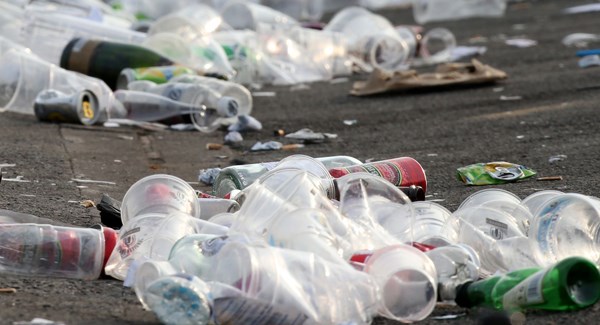

The latest litter survey by business group Irish Business Against Litter (IBAL) shows Waterford City, while still Clean, losing its top 10 spot in in the ranking of 40 towns and cities nationwide, slipping to 16th. Ballybeg failed to retain its Clean status and is now “moderately littered” in 34th. The survey also revealed that Ireland’s main tourist towns and cities are cleaner than ever as the peak season for visitors approaches. Kilkenny topped the rankings, with Ballymun in Dublin City a litter blackspot at the foot of the table.
The An Taisce report for Waterford City stated:
“Waterford deserves much praise. Plunkett Train Station deserves a special mention for the overall presentation and maintenance of the exterior environment – mural, plaques and planting are lovely. The ‘Cultural Quarter’ was an excellent environment in terms of both overall presentation and litter – it was spotless throughout. The Mall, Barronstrand Street, Hanover Street and Great George’s Street were also all top ranking. The People’s Park was a wonderful site – clearly it is a much respected and cared for environment. New Street Community Garden was by far the most heavily littered site surveyed in Waterford City – this beautifully laid out ‘pocket park’ in the centre of the city has been very poorly respected, to the extent that it would be unpleasant to sit and enjoy. It wasn’t just littered but subjected to dumping e.g. duvet and clothing items. Where does responsibility for this site lie? Bus Eireann Bus Depot and the Bottle / Clothing Bank directly outside were both very poor i.e. Grade C sites.
The ‘Waterford Walls’ initiative is worth noting – it has added some welcome colour in otherwise run down / bleak environments, with the added bonus of adding some ‘art’ throughout the city.”
The An Taisce report for Ballybeg stated:
“Ballybeg’s result suffered due to two litter blackspots. The Horticultural Project Initiative (subject to long-term dumping e.g. mattresses and bedding) and an area beside the GAA Club both need attention as they will only encourage further dumping. Top ranking sites included Ballybeg Community Project, St. Saviour’s GAA Club and the residential areas of Glencarra and Priory Lawn.”
Litter levels were assessed by An Taisce, who found 31 of towns and cities, or 77%, to be clean. This was in line with recent IBAL surveys. Kilkenny topped the rankings for the 5th time, ahead of Athlone and Killarney, and the centres of our main cities Dublin, Cork and Galway were cleaner than previously, only Limerick failing to achieve Clean status.
“Today’s tourists demand high levels of cleanliness and these results indicate that’s what they will be getting this year when they come to Ireland,” says IBAL’s Conor Horgan.
“It is also important that their first impression be a good one, so it’s pleasing to see the roads around Dublin Airport are again to Clean to European norms.”
For the first time in 3 years, an area received the lowest grade of ‘litter blackspot’ as Ballymun recorded one of the worst results since the league was founded 17 years ago.
“An indication of the progress we’ve made over past 5 years has been the absence of litter blackspots in our survey,” says Mr Horgan. However, as the Ballymun and other results show, there has been little if any progress in disadvantaged areas of our cities. The gap between these areas and the commercial high-footfall commercial city centres is widening.”
Dumping continues to feature prominently in IBAL surveys and accounts for many of the individual blackspots found in cities, as in Ballybeg. Limerick City’s rating was brought down by dumping in the basements of Cecil Street and an area at Upper William Street, described as “filthy, one of the worst sites in a city centre environment.” A house on Seville Place in Dublin was used as a dumping ground, with “a mattress and all manner of rubbish” present, while a car park at Lakelands View in Mahon in Cork was “in a shocking state, clearly used as a dumping ground for domestic rubbish … soiled nappies and several dozen black sacks”.
“We have a perception of dumping as something that takes place outside of our cities and towns, far from public view,” says Mr Horgan. “The survey shows this is not the case.”