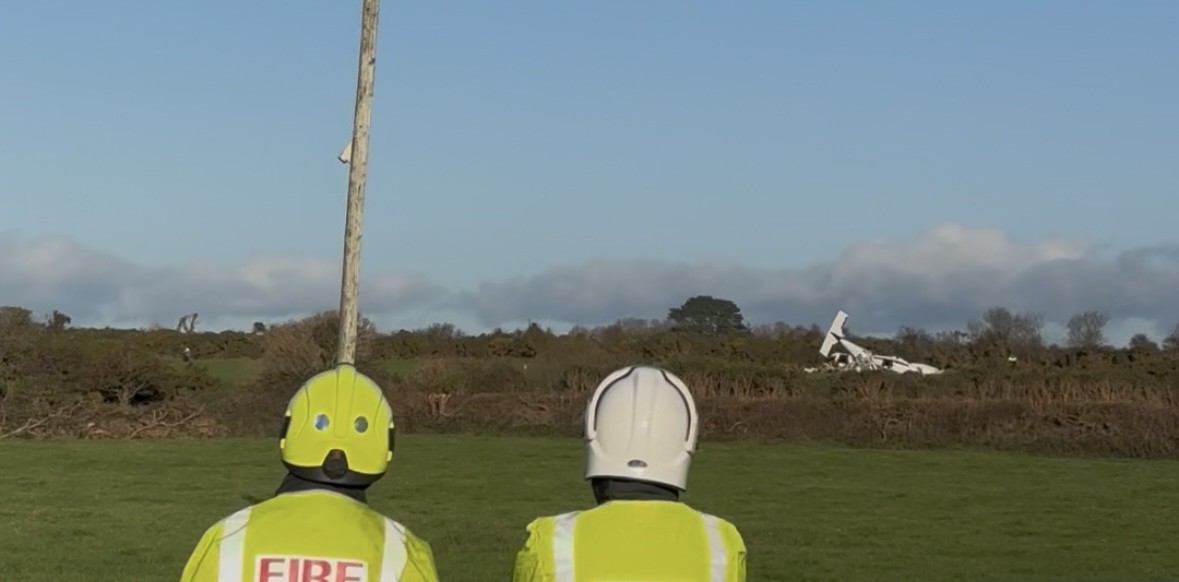
Crash Details
The pilot was the sole occupant of a small Vulcanair P68 aircraft. The plane crashed at Lisselan, near Tramore, on 20 November.
The aircraft held a certificate of airworthiness from the Irish Aviation Authority (IAA), issued one month earlier.
A Slovenian company had bought the plane from a UK-based firm. The aircraft travelled from Liverpool to Sligo. The pilot, a flying instructor, collected it after flying in from Germany.
Planned Flight
The pilot was flying the aircraft to Ljubljana, Slovenia, on a multi-sector journey.
The crash occurred during the leg between Sligo and Béziers Cap d’Agde Airport in France. The flight was due to last just under five hours.
Emergency Declared
At about 12.37 pm, Shannon Airport received notification that the aircraft, registered EI-HPY, had developed technical problems. The pilot planned to divert to Waterford Airport.
According to a preliminary report from the Air Accident Investigation Unit, the pilot declared an emergency. He reported low fuel pressure and an alternator fault on the left engine.
He requested a direct approach to Waterford. He said the left alternator was “off” and fuel pressure was “low”.
Final Communications
Air traffic control cleared the pilot to enter controlled airspace. He confirmed that he had the airfield in sight. He said he planned a normal landing, despite reduced power.
The pilot later reported that the left engine began to “shake” when he advanced the throttle.
As the aircraft neared the airport, he said he would “make a left circle.
Witness Footage
An eyewitness inside the terminal building recorded a short mobile phone video after the approach was abandoned.
The footage appears to show the aircraft turning gently left away from the runway. The wings level briefly before the plane enters a steep left turn. It then rapidly loses altitude and disappears from view.
Impact and Aftermath
The aircraft crashed into a farm field west of the runway about seven seconds after entering the steep turn.
The pilot died in the crash. Fire did not break out.
The report says the aircraft struck the ground on an easterly heading. It impacted in an extreme nose-down position.
Both wings suffered severe damage. The left engine separated from its mountings, with the propeller still attached. The propeller blades showed significant bending.
The right engine remained attached. Its propeller blades also showed heavy bending and curling at the tips.
The fuselage fractured behind the cabin and folded back over the roof.
Investigation Findings
The fuel tanks ruptured on impact. Investigators noted a strong smell of fuel at the scene.
Recovery teams transported the wreckage to the Air Accident Investigation Unit facility in Gormanston, Co Meath.
Initial checks found that one spark plug failed to produce a spark. Investigators also found the fuel pump did not meet specifications. Both parts sustained damage during the crash.
A final report will be published at a later date.
For the latest Waterford News and Sport , tune into WLR News on the hour and download the WLR App for news on demand