Explained: What’s the plan to ban turf in my fire?

Sarah Mooney
A ban on the sale and distribution of turf has made headlines in recent days, with conflicting statements from Ministers adding to some general confusion.
Here is what is going on with the turf in your fire...
 However, Minister of State Ossian Smyth has said it is envisaged that while the commercial “stripping” of bogs and the commercial distribution of turf for profit will end, small-scale cutting and selling between neighbours will not be impacted.
Meanwhile, Minister of State Malcolm Noonan has suggested that those using heavy machinery, selling online or in urban centres would be subject to the ban. He said the ban would be applied using a common-sense approach to “large-scale extractions”.
However, Minister of State Ossian Smyth has said it is envisaged that while the commercial “stripping” of bogs and the commercial distribution of turf for profit will end, small-scale cutting and selling between neighbours will not be impacted.
Meanwhile, Minister of State Malcolm Noonan has suggested that those using heavy machinery, selling online or in urban centres would be subject to the ban. He said the ban would be applied using a common-sense approach to “large-scale extractions”.
What exactly is being banned?
Last September, Minister for the Environment Eamon Ryan announced new standards for domestic solid fuels would be introduced across the State within a year. These standards effectively put in place a national smoky fuel ban, extending regulations already in place in the likes of Dublin and Cork, and meaning the most polluting of fuels will no longer be available on the Irish market. At the time, the Minister said no ban on the burning of sod peat – turf – would be introduced to accommodate those with rights to harvest it. “However, a regulatory regime to reduce its harm in more urbanised areas is under examination,” he said. The shape of this regulatory regime has now emerged, with the Minister proposing a ban on the sale and distribution of turf from September.Why is the ban being introduced?
Poor air quality causes premature deaths and each year some 1,300 people die in Ireland due to air pollution from solid fuel burning, according to the European Environment Agency's 2020 report on Air Quality in Europe. The chief culprit in these deaths is particulate matter (solid and liquid particles suspended in the air, made of a variety of components such as pollen, soot, smoke, soil and dust) in the form known as PM2.5. The dominant source of PM2.5 in Ireland is residential solid fuel burning, which represented a 55.27 per cent share of the nation's total national PM2.5 emissions in 2019. Research indicates that the introduction of the “smoky coal ban” in Dublin in 1990 has resulted in approximately 350 fewer mortalities per year, reducing cardiovascular, cerebrovascular and respiratory mortality in the general population.Who will the new turf ban impact?
The turf ban does not appear to be a blanket one, and aims to leave historic turbary rights intact – which involve the right to dig, cut and carry away turf from bogland to use as fuel for one's house. Mr Ryan has said people with turbary rights “will continue to be permitted to extract peat to heat their own dwelling, but will not be permitted to place it on the market for sale or distribution to others.” This has caused concern that people will be unable to pass along turf they have cut to neighbours, family or friends, especially older ones who may be unable to cut their own.
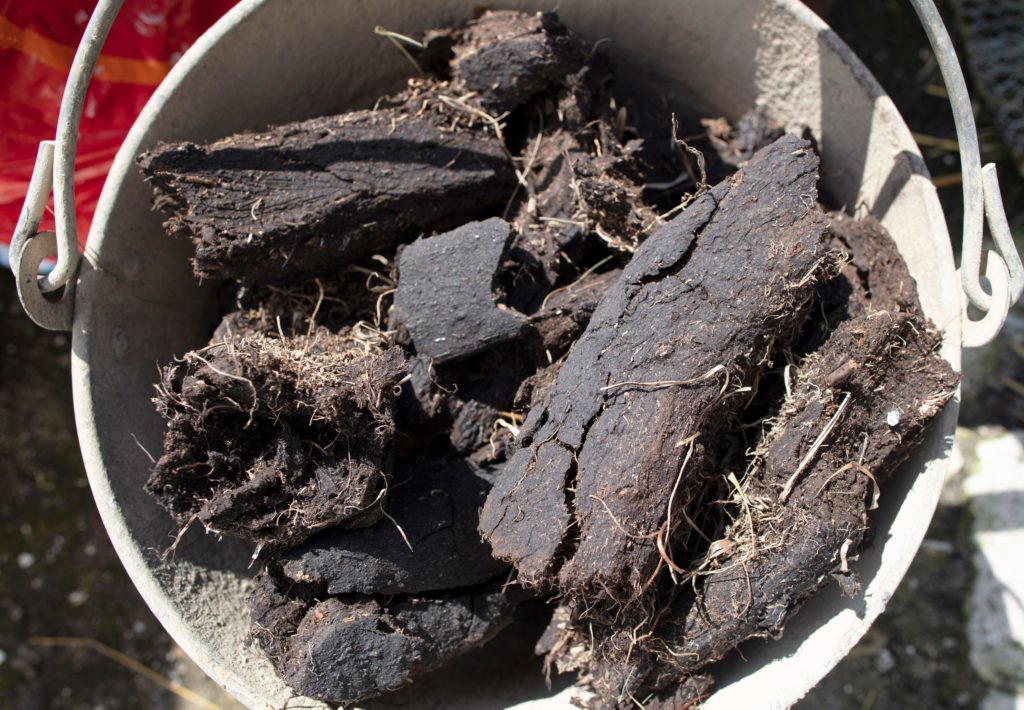
Turf in a bucket. Photo: Getty Images