
The Dail has heard that Waterford and Limerick will not become rent pressure zones.
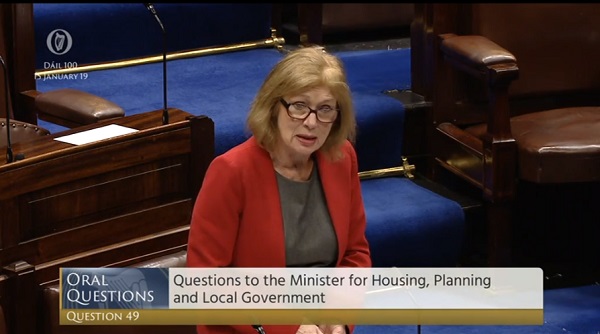
Labour housing spokesperson Jan O’Sullivan called for both cities to be included in the pressure zones where rents cannot be increased by more than 4 per cent a year.
Housing Minister Eoghan Murphy acknowledged that there were significant pressures in areas like Waterford and Limerick however he says they don’t currently meet the criteria to be included.
He told the Dail that not all parts of Waterford City recorded increases in four quarters out of the previous six “to allow them to be designated under either of the criteria let alone be designated under one of them.
“We are seeing significant rent pressures in areas like Limerick that are outside of rent pressure zones but the legislation as drafted does not allow for me, the Housing Agency or local authorities to take a different approach.”
Deputy O’Sullivan called on the Minister to review the legislation saying it’s causing homelessness in both cities.
“Will the Minister either change the legislation, which would be a very small change, or introduce regulation under the legislation? It is not fair.
“If one looks at the areas in Dublin, by and large an urban area is an urban area. A local electoral area is either rural or urban but if one looks at a place like Limerick or Waterford, both have extensive rural parts of their counties included in the local electoral areas we are talking about.
“It means renters in the urban parts of those local electoral areas have to put up with really high rent increases that are causing homelessness. The Minister needs to look at it.”
Minister Murphy says they have to be really careful about their approach.
“One of my predecessors gave a signal to the market that he was going to do something about rents. It did not happen but during, I suppose, what one might call the period of dithering, rents increased quite dramatically to the detriment of tenants.
“What we have are rent pressure zones that were brought in under legislation. We cannot take an “almost there” approach; we have to follow the law as it is drafted. Rent pressure zones are still new in the scheme of things but have been shown to work in those areas where they are being implemented for existing tenancies.
“We have to be very careful of all the data we receive from the RTB, including the data that tell us we are losing landlords. Since 2015, we have lost over 1,500 landlords. Some of them own more than one property, which means even more tenancies than that have been affected. In everything we do, we have to make sure we are protecting the tenant as best we can. We are not protecting a tenant if we are bringing in measures that are forcing landlords out of the market. That would be making the situation worse.”