What Is Crockery Mountain?
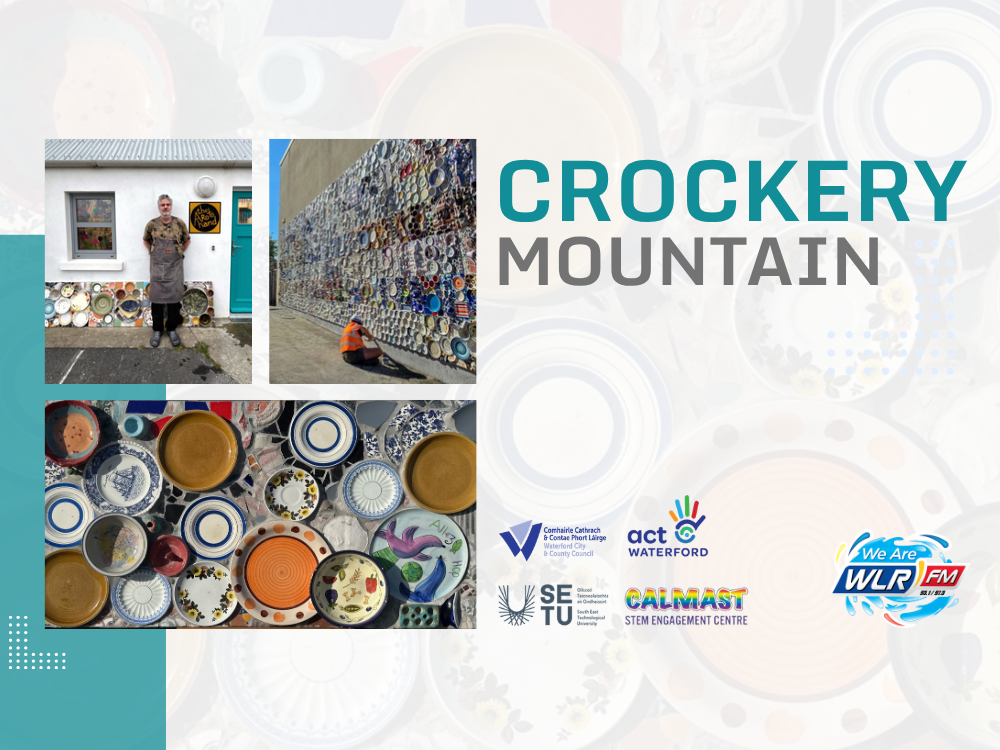
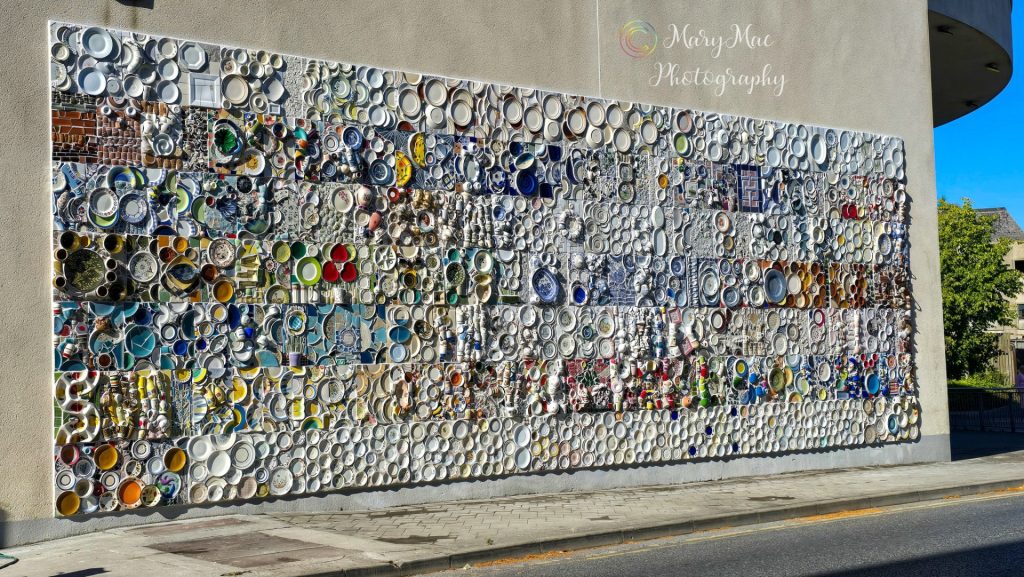
Crockery Mountain stands as a bold community mosaic made from plates, cups, bowls, saucers, and teapots. This unique artwork covers a large external wall in Dungarvan, located in County Waterford.
The project transforms thousands of surplus and sentimental crockery items into environmental art. Local people donated every piece used in the mosaic. Each item carries its own story and history.
Who Created Crockery Mountain?
A dedicated team of 150 community volunteers built this remarkable installation. Environmental artist Sean Corcoran guided the group through hands-on Mosaic Masterclasses at The Art Hand.
Participants learned practical mosaic skills and applied them directly. The team used rapid-set external tile adhesive to secure each piece. They assembled the artwork across 244 frost-proof backing boards in a specially designed mosaic workspace.
Listen Back HERE
How Big Is the Mosaic?
Crockery Mountain measures an impressive 12.14 metres wide and 4.2 metres high. That equals roughly 40 feet by 14 feet.
The mosaic includes nearly 10,000 individual crockery pieces. Some fragments appear as small as a marble. Others feature large serving plates. Every single piece came from public donations.
Where Can You See Crockery Mountain?
You can find the artwork on an external wall at the Movies at Dungarvan Cinema. The location sits on Richard A. Walsh Street within Dungarvan Shopping Centre.
This public installation remains accessible to locals and visitors alike. It adds colour and meaning to a busy urban space.
Google Maps Pin of the location: HERE
The Meaning Behind the Name
The name “Crockery Mountain” draws inspiration from surplus stock phrases like “butter mountains.” These terms described excess goods across Europe during the 1970s.
Today, many households store more crockery than they need. Cupboards overflow with unused plates, novelty mugs, and inherited tea sets. This project highlights the modern surplus.
The artwork invites people to rethink consumption habits. It encourages reflection on what we keep and why we keep it.
Why Choose Mosaic Art?
Mosaic offers an inclusive and accessible art form. People of all ages and abilities can take part.
The process builds collaboration and shared ownership. Participants feel connected to the final piece. The artwork reflects a collective effort rather than an individual vision.
Crockery Mountain also sparks important conversations. It asks questions about waste, value, and sustainability. These discussions can inspire real behavioural change.
Why Use Crockery?
Every piece of crockery tells a story. It reflects design trends, cultural habits, and personal memories.
The project explored key questions:
- Where does our crockery come from?
- How long do we use it?
- Can we recycle it effectively?
- Why do we keep unused items?
These insights highlight the environmental impact of overconsumption. Crockery rarely enters sustainability discussions, yet it plays a significant role in household waste.
How Was It Installed?
The team spent seven months preparing the mosaic in the workshop. They then completed the installation over 11 days.
Volunteers worked alongside Sean, James, and Laura to mount the panels. They used a Mobile Elevated Working Platform to reach higher sections safely.
Each panel connected carefully to form a seamless final piece. The installation required precision, teamwork, and planning.
Understanding the Layout
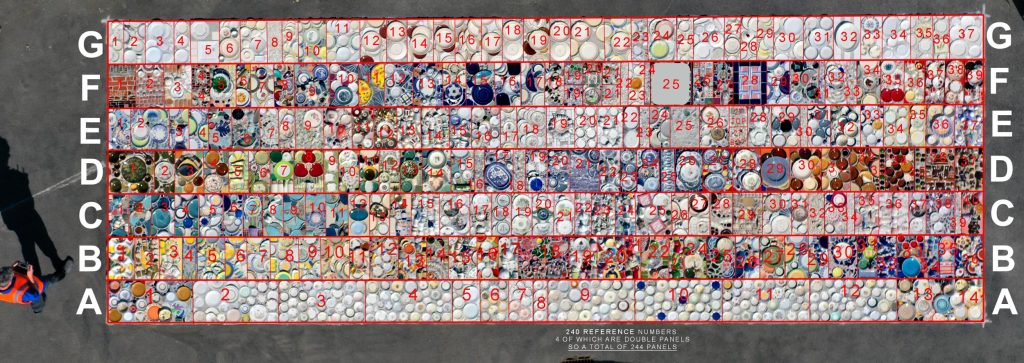
The mosaic features seven distinct layers labelled A to G. Layer A forms the base, while layer G completes the top.
These layers resemble geological formations or landfill cross-sections. They symbolise how materials accumulate over time.
The rectangular shape mirrors the cinema screen behind the wall. This subtle design choice links the artwork to its location.
Each panel includes a grid reference for accurate placement. For example, A1 marks the bottom-left panel. G37 sits at the top-right corner.
This system ensures perfect alignment and helps identify specific sections within the artwork.
About The Art Hand
The Art Hand operates from Bunmahon along the Copper Coast. Sean and Miranda run workshops and manage a small gallery space.
The studio specialises in large-scale community mosaics. Their projects bring people together while addressing environmental themes.
They have completed installations across Ireland and internationally. Each project blends creativity with social awareness.
Current projects and workshops appear on The Art Hand Facebook page
Visit Crockery Mountain
Crockery Mountain sits just a short drive from Bunmahon. Visitors can easily combine both locations into one trip.
The artwork offers more than visual appeal. It delivers a powerful message about sustainability and community action.
Plan your visit and experience one of Ireland’s most unique environmental art installations.
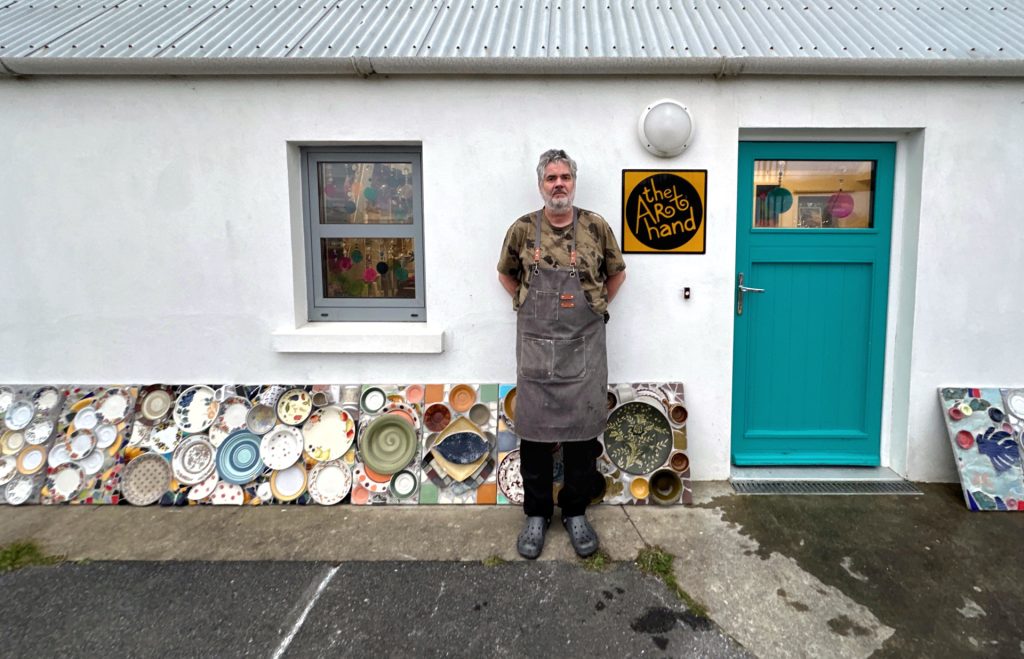
Who is behind this initiative? This project was facilitated by Sean Corcoran of The Art Hand and is the result of the creative climate action initiative Act Waterford, funded by Creative Ireland and managed by Calmast at SETU in partnership with Waterford City and County Council.
For the latest Waterford News and Sport, tune into WLR News on the hour and download the WLR App for news on demand.